Tourison/Blog/Destination guides
Chasing the Northern Lights: The Ultimate Lofoten and Tromsø Guide
Tourison may earn a commission when you book through links on this page, at no extra cost to you. How we pick deals
How to see the northern lights in Tromsø and Lofoten: season, KP and cloud forecasts, chase tours vs self-drive, getting between the two, and a 5-day plan.
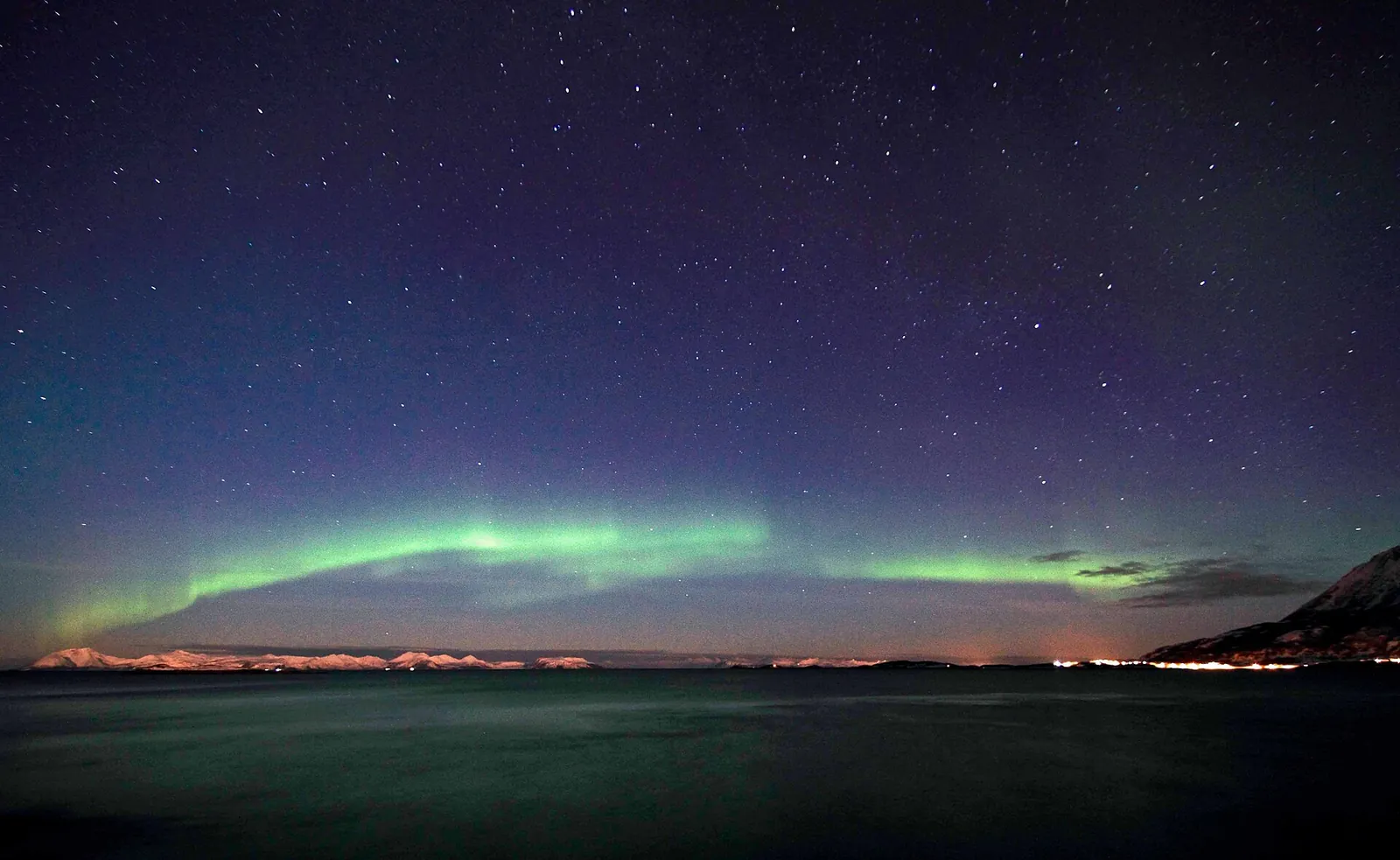
Northern Norway is one of the most reliable places on earth to see the aurora, but reliable doesn't mean guaranteed. The lights depend on solar activity you can't control and cloud cover you can sometimes outrun. This guide covers northern lights in Tromsø and Lofoten as one trip: when to go, how to read the forecasts, whether to join a chase tour or drive yourself, and how to get from Oslo to Tromsø and on to the islands by plane, ship or ferry.
- Best time: late September to late March. October, February and March pair long nights with more daylight for everything else.
- Budget per day: roughly US$200–300 per person on a mid-range plan with a shared room and car, plus chase tours from about US$70–200 (Oct 2026).
- How to get there: fly Oslo–Tromsø (about 1 hour 50 minutes), then Widerøe to Leknes or Svolvær, the Hurtigruten coastal ship, or a ferry from Bodø.
- Days needed: five at minimum: two or three nights in Tromsø, two or three in Lofoten. More nights mean more chances at a clear sky.
When is northern lights season in Tromsø and Lofoten?
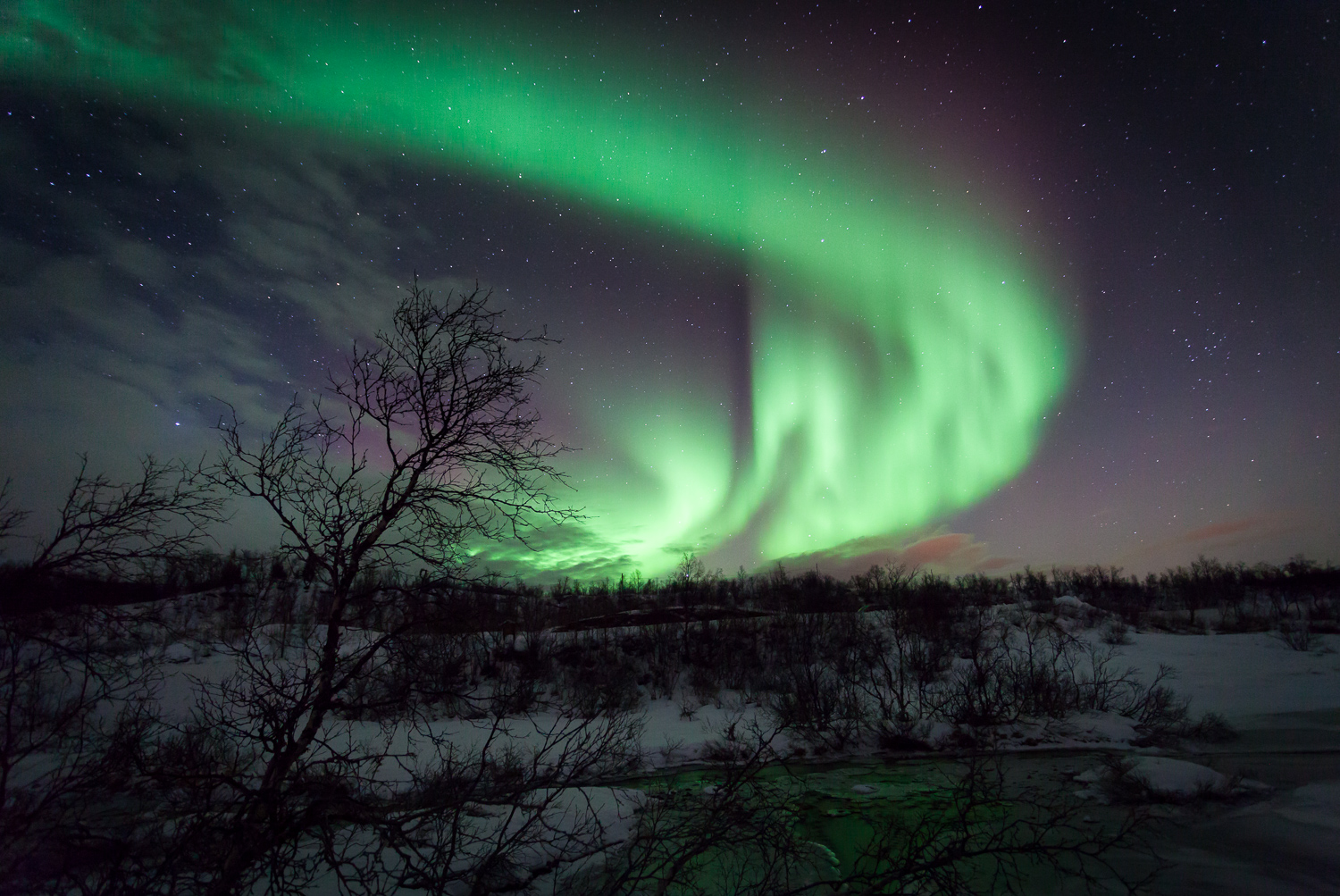
The aurora is overhead all year at this latitude. You just can't see it when the sky is light. In practice the season runs from late September to late March, and Lofoten guides often stretch it to mid-April. Most activity tends to fall between about 10 pm and 2 am, though strong displays can start right after dusk.
Each part of the season feels different:
- Late September to October: autumn colours, lakes and fjords not yet frozen (good for reflections), mild temperatures and fair daylight for driving. Frequently a sweet spot.
- November to mid-January: the polar night. In Tromsø the sun stays below the horizon from roughly 27 November to 15 January, so you get blue twilight around midday and darkness the rest of the time. More hours for aurora, fewer for sightseeing. Lofoten sits further south, so its dark period is shorter.
- February to March: deep snow, the sun back, and longer days that make Lofoten's mountain roads easier and more scenic. Lots of photographers choose this window.
A note on the sun itself: Solar Cycle 25 most likely peaked around October 2024, and the Sun is now in its declining phase. That doesn't end the show. Strong storms still happen (a severe one on 19 January 2026 was seen as far south as California), and coronal holes in this phase send fast solar wind that can return roughly every 27 days. Expect big nights to be a little less frequent than in 2024–25, not rare.
Reading KP and cloud forecasts without overthinking it
Two numbers decide your night: geomagnetic activity and cloud cover. Clouds matter more.
KP index. KP is a 0–9 scale of global geomagnetic disturbance. Tromsø sits under the auroral oval, so even a modest KP 2 or 3 can put lights directly overhead on a clear night. Lofoten is a little further south but still well placed. High KP numbers matter far more for viewers in southern Norway or the UK than for you up here. The NOAA Space Weather Prediction Center's 30-minute aurora forecast is the most useful short-range tool. Many aurora apps draw on the same data.
Cloud cover. Through thick cloud you will see nothing at all, whatever the KP. The Norwegian Meteorological Institute's forecasts on yr.no include hourly cloud cover by layer (low, medium, high). Low cloud hugging the coast is the classic problem. It often thins inland or on the far side of a mountain range, which is exactly why chasing works.
A practical routine: check yr.no in the afternoon for the clearest area within two hours' drive, glance at the NOAA forecast around dinner, then go out anyway if the sky is clear. Plenty of good nights start with a forecast that looked mediocre.
Chase tours vs self-drive
This is the biggest decision for most first-time aurora hunters, and the answer is often "both": a guided chase in Tromsø, then your own car in Lofoten.
Guided chase tours from Tromsø
Tromsø has a well-developed chase-tour scene. Guides watch the same forecasts you would, but they also know which valleys clear first, and on cloudy nights they will drive a long way, sometimes as far as the Finnish border. Prices for 2025–26 minibus chases started at about 750 NOK for budget options and ran to about 1,750–2,100 NOK (roughly US$70–200, Oct 2026) for small-group tours. Some operators discount a repeat trip if you see nothing. Many lend thermal suits and boots and include a campfire and photos, but check what's included. Photos can cost extra.
Small-group chases from Tromsø fill up in clear-forecast weeks; compare Tromsø northern lights chase tours on Klook.
Book a chase for your first or second night. If it works, you have the rest of the trip free. If it doesn't, you still have time to try again.
Self-drive
Driving yourself gives flexibility and costs less for two or more people. Compact rentals in Tromsø start from about US$40 a day (Oct 2026), and 4x4s cost more. The trade-off is winter driving: dark, icy roads, wind, and in Lofoten the Gimsøystraumen and Raftsundet bridges can close for hours in strong wind with no alternative route. Rental cars in northern Norway normally come with winter tyres, often studded, but confirm when you book. Check road status on Statens vegvesen's 175.no before every long drive.
Self-drive suits Lofoten especially well. The islands are compact, and the best spots sit right off the E10. If you'd rather not drive at night, a local Lofoten northern lights tour works much like the Tromsø ones on a smaller scale.
Tromsø vs Lofoten: which is better for the northern lights?
You don't really have to choose. Each makes up for what the other lacks.
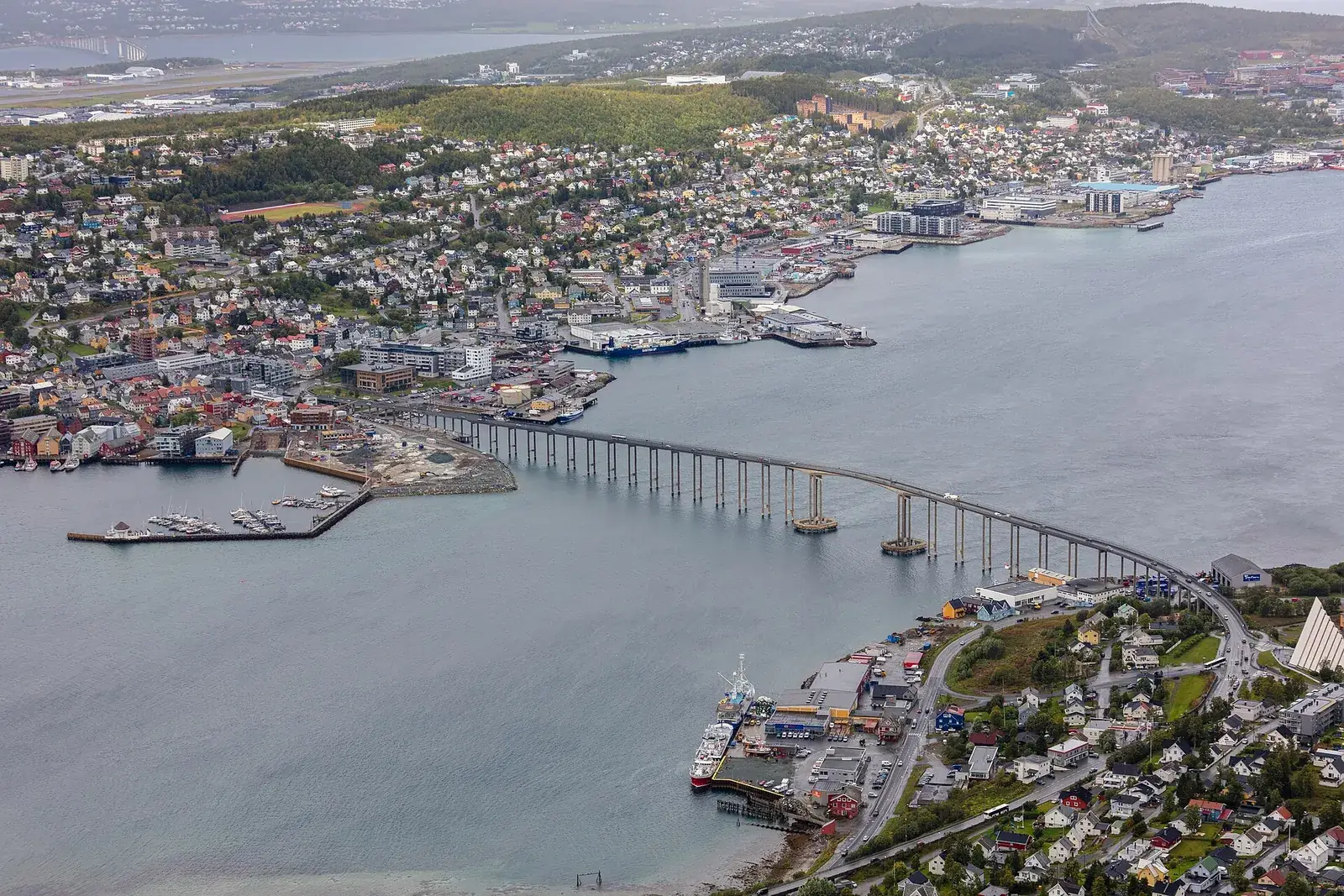
Tromsø is a proper city of around 78,000 people, with an airport ten minutes from town, plenty of hotels and restaurants, and the widest choice of tours in the Arctic. On clear nights you can see the aurora from the edge of town, and the Fjellheisen cable car runs until midnight (return tickets from about US$47, Oct 2026) up to a viewpoint over the city and fjord. The downside is that the city is bright, so you need to leave it for the best views, and coastal weather can sit on it for days.
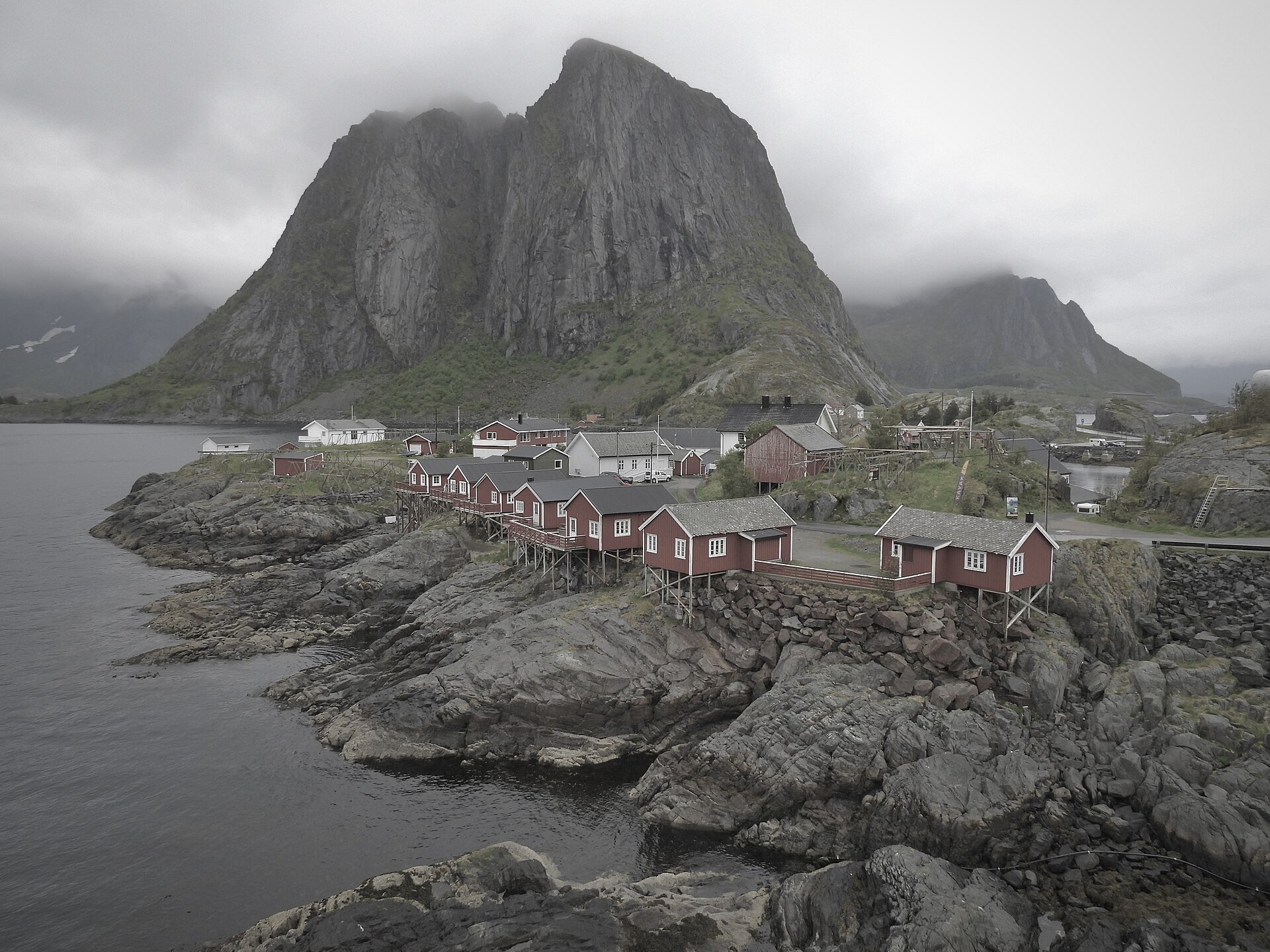
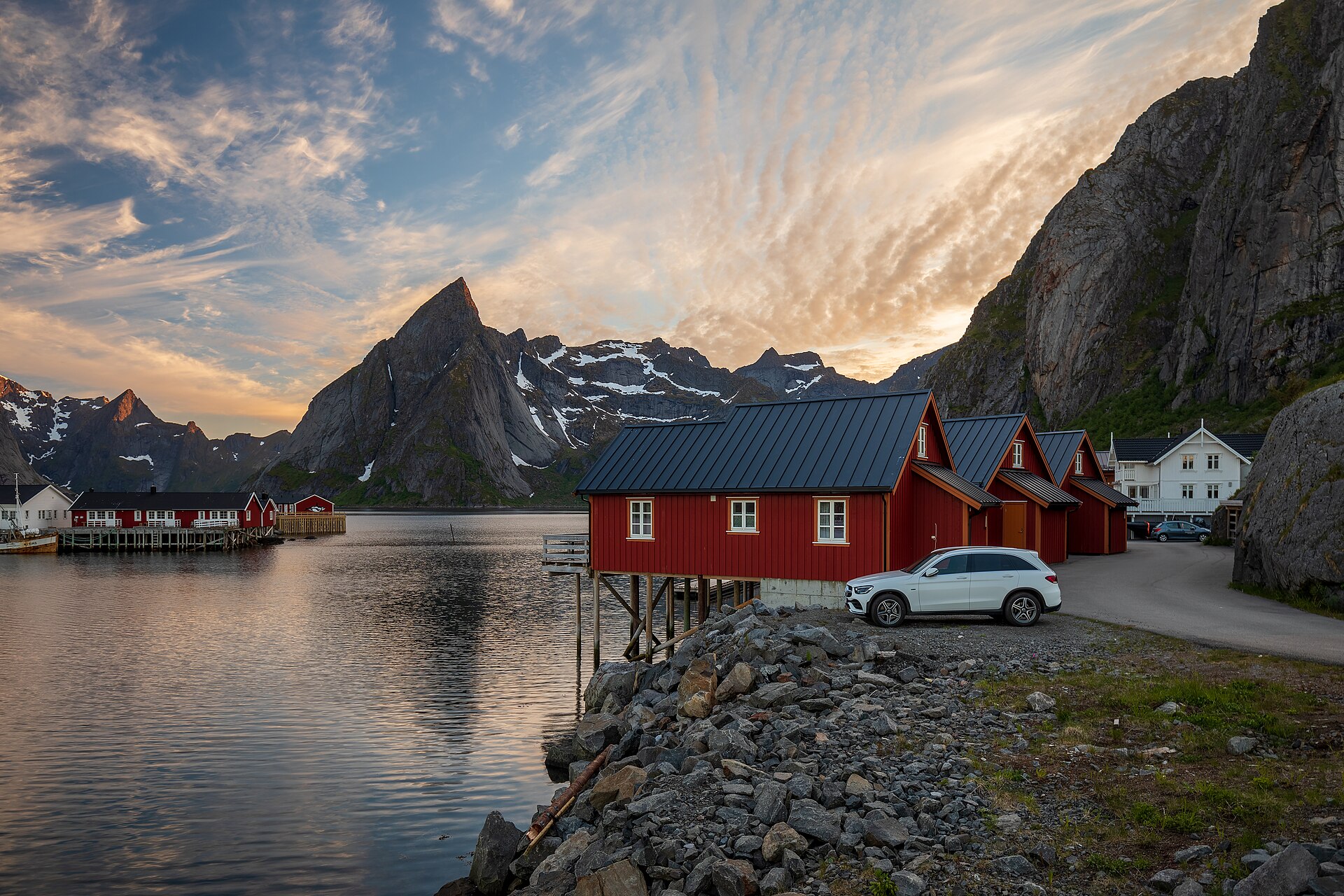
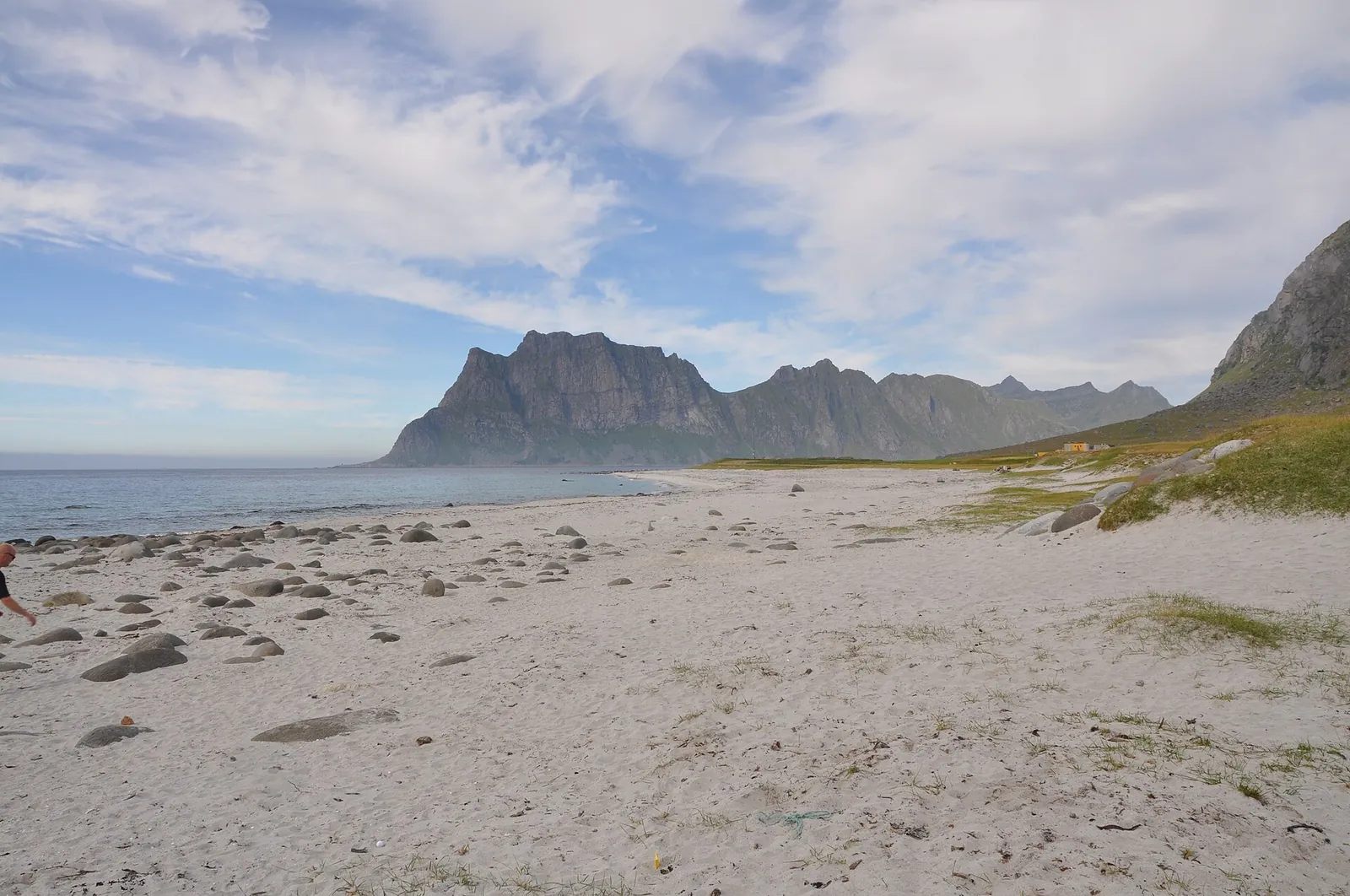
Lofoten is the photogenic one: jagged peaks rising straight from the sea, red fishing cabins, and north-facing beaches with very little light pollution, because most of the islands' roughly 25,000 residents live on the central and southern side. Classic spots include Uttakleiv and Haukland beaches, Skagsanden at Flakstad, the bridge at Hamnøy, Eggum, and flat Gimsøy, which has open sky in every direction. The trade-off is fewer services, longer transfers, and weather that changes by the hour.
If you only have three nights, pick Tromsø for better odds and easier logistics. If you have five or more, combine them. Two separate weather systems give you more chances than one.
Getting there: Oslo to Tromsø
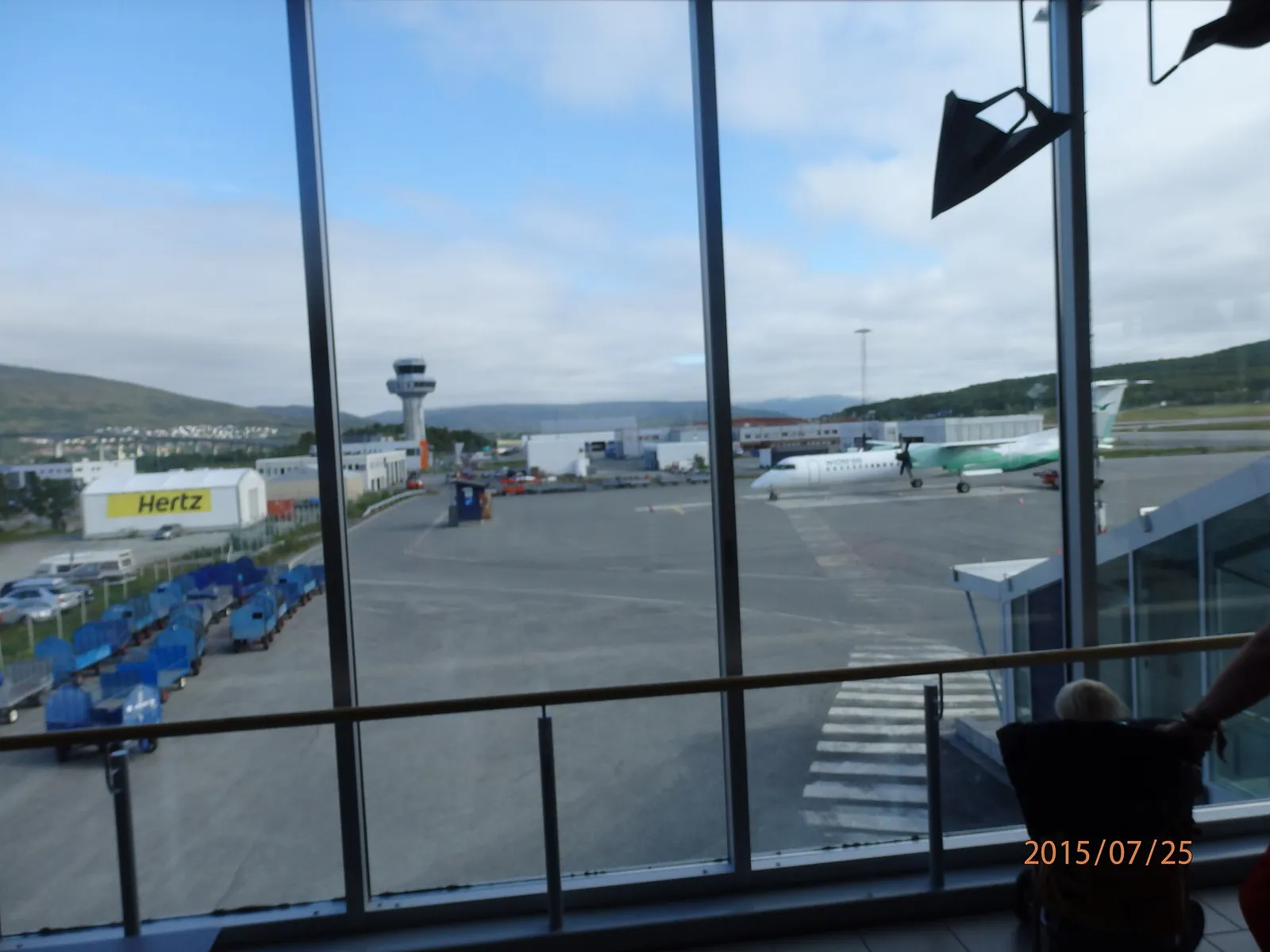
Tromsø (TOS) is the main gateway. SAS, Norwegian and Widerøe fly nonstop from Oslo Gardermoen many times a day, and the flight takes about 1 hour 50 minutes. Fare trackers show one-way prices from about US$75–90 (Oct 2026), with November and December usually cheapest. Compare Oslo to Tromsø flights early if you're travelling in February or around New Year. There are also seasonal direct flights to Tromsø from several European cities, which can save the Oslo connection.
From the airport, the airport express bus into the centre costs about 125 NOK one way (roughly US$12, Oct 2026) and takes around 15 minutes. You can pay by card on board or buy ahead on bussring.no.
Tromsø or Bodø to Lofoten: plane, ship or ferry
Lofoten has no single gateway, and that's what makes this leg confusing. These are your realistic options:
Widerøe flights
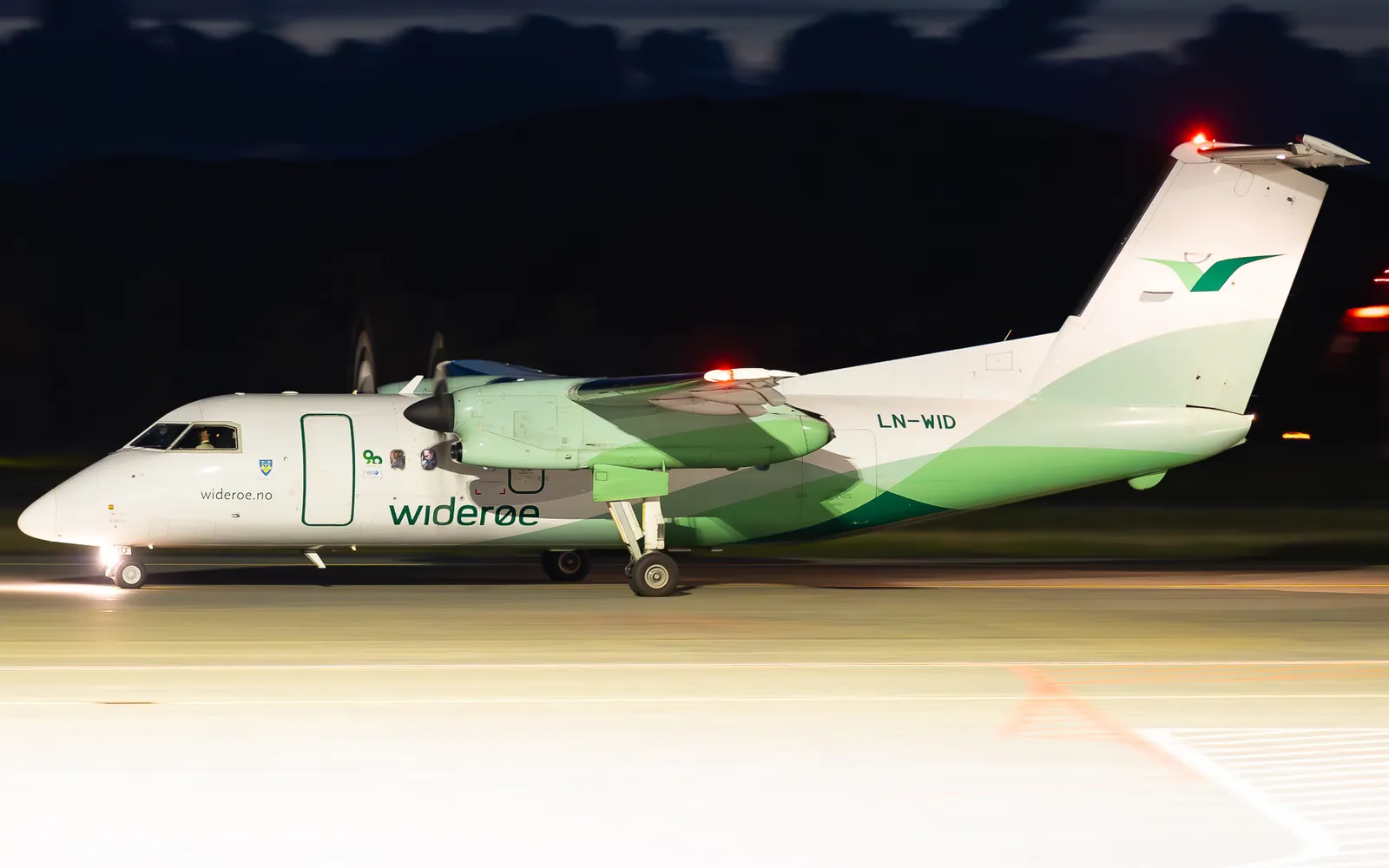
Widerøe flies small Dash 8 turboprops into Leknes (LKN) and Svolvær (SVJ). Tromsø–Leknes takes just under an hour. Check Tromsø–Leknes fares, because frequency varies a lot by season. From Bodø, Leknes and Svolvær are each only 25–30 minutes away. If you're coming straight from southern Norway, it can be simplest to fly Oslo to Bodø and connect, or book Oslo–Svolvær through Bodø as one ticket. These short-field airports are sensitive to wind, so leave slack in your plans.
Hurtigruten (and Havila) coastal ships
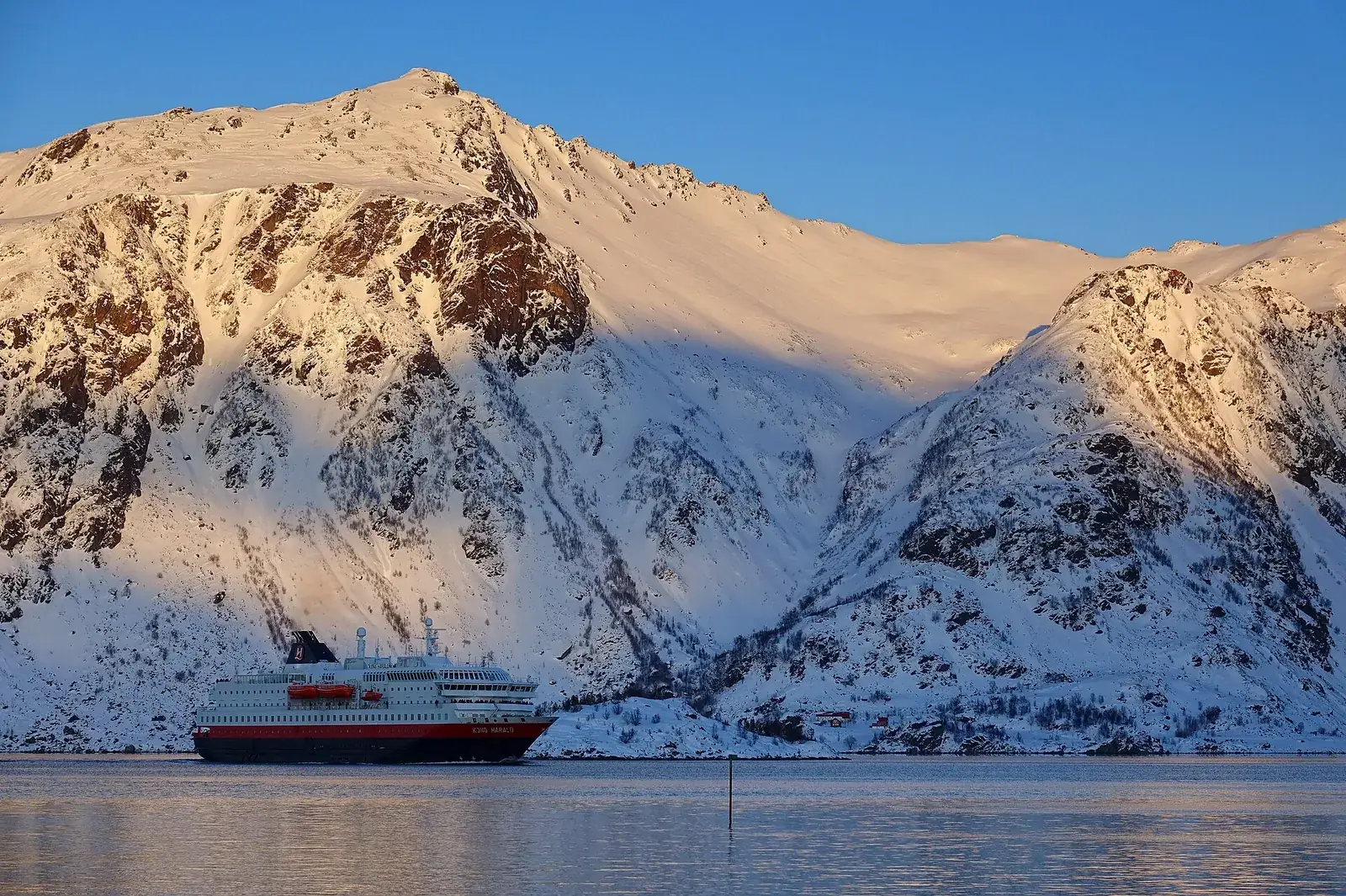
The coastal express sails every day in each direction. Southbound, Tromsø to Svolvær takes about 17 hours, overnight, with the ship leaving Tromsø in the early hours. Check the current timetable. Northbound from Bodø, ships typically leave mid-afternoon, reach Stamsund about four hours later and Svolvær about six hours after Bodø. It's slow, but it's a transfer you can also watch the aurora from, since the deck is dark and you're at sea, away from town lights. Hurtigruten and Havila share the route, so check which ship sails on your date. Holiday sailings around Christmas and New Year run to different times.
Bodø–Moskenes car ferry
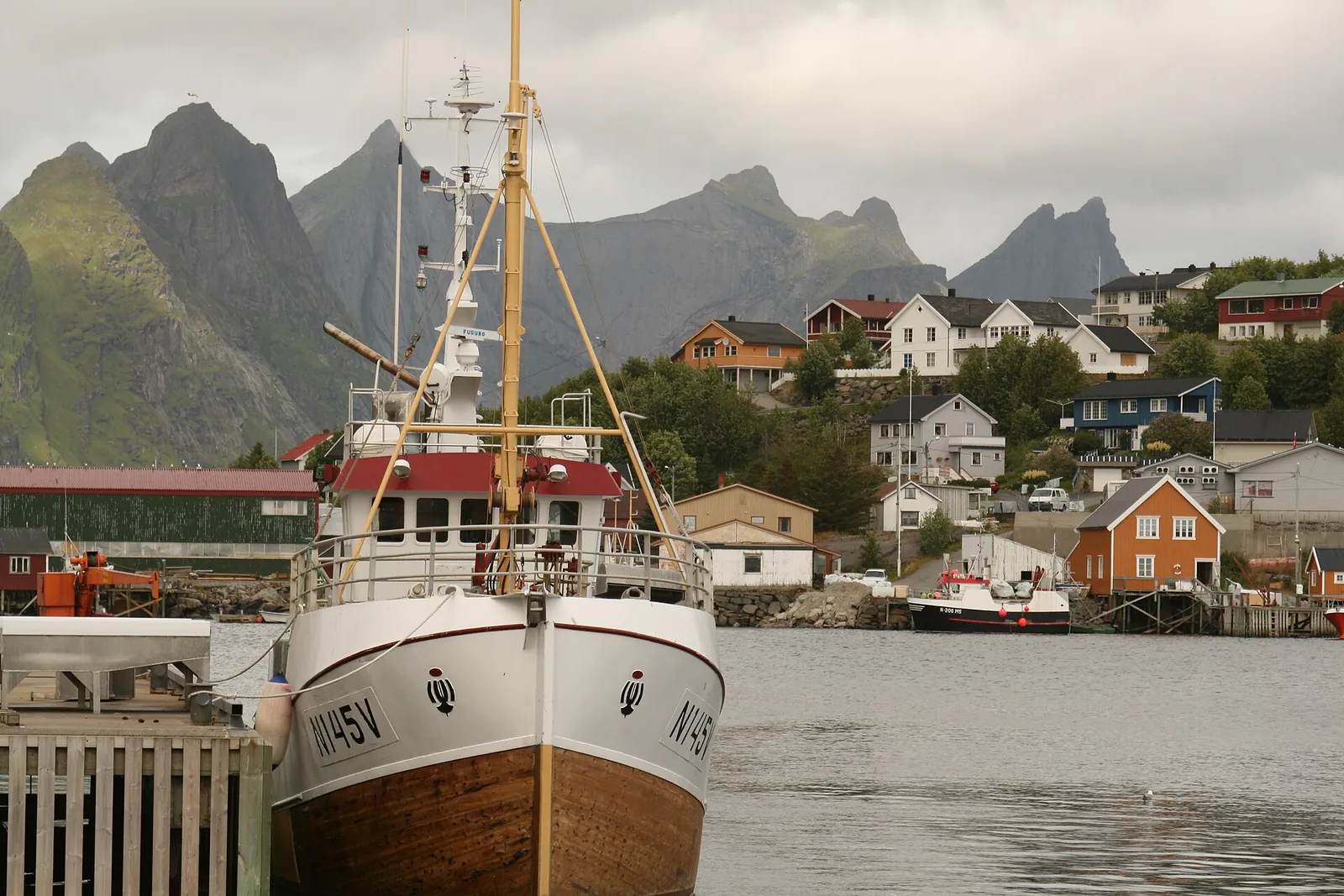
Torghatten Nord's ferry crosses from Bodø to Moskenes, near Reine, in about 3 hours 15 minutes. It's the obvious choice if you've rented a car on the mainland. In winter there are fewer sailings, and the Vestfjord can be rough. Only part of each sailing can be reserved, and a reservation costs an extra 250 NOK on top of the fare. Passengers without a car can also take the Boreal express boat from Bodø to Svolvær (about 3 hours 25 minutes, typically one service a day each way).
Driving from Tromsø
Tromsø to Svolvær is roughly 420–450 km via the E8, E6 and E10. Plan on 6.5 to 8.5 hours of winter driving. It's doable as a scenic one-way day with a rental drop fee, but in December, with only a few hours of twilight, flying or taking the ship is usually wiser.
Where to stay
In Tromsø, staying central means you can walk to restaurants and tour pickups, which mostly start from the city centre. In Lofoten, pick one base in the west (Reine, Hamnøy, Sakrisøy) for the dramatic scenery and one in the middle (around Leknes, Gimsøy or Henningsvær) to keep drives to the northern beaches short. Traditional rorbuer, former fishermen's cabins on stilts over the water, make the most memorable base. Book early for February and March. Our Lofoten destination page has more on areas.
What to wear
Coastal northern Norway is milder than its latitude suggests. Tromsø's January average is about −4°C. But standing still on a beach at midnight in wind feels far colder than walking around town. Dress in layers:
- Base layer: merino wool top and leggings. Avoid cotton, which holds moisture.
- Mid layer: fleece or a light down jacket, and a second wool layer on cold nights.
- Outer layer: an insulated, windproof parka and insulated or shell trousers. Many tours lend thermal overalls.
- Feet: insulated winter boots with room for thick wool socks, plus slip-on ice grips (sold everywhere in Norway as brodder). Icy pavements cause more injuries than the cold does.
- Hands and head: thin liner gloves for camera controls under warm mittens, a wool hat, and a neck gaiter. Chemical hand warmers also keep camera batteries alive.
Camera settings for the aurora
Modern phones handle the aurora surprisingly well in night mode. Brace the phone against something solid and hold still for the full exposure. With a camera, start here and adjust:
- Tripod: essential. Use a 2-second timer or remote to avoid shake.
- Lens: wide and fast, around 14–24 mm at f/1.8–f/2.8.
- ISO: 1600–3200 to start. Drop it if the display is bright.
- Shutter: 5–15 seconds for slow, faint arcs, 1–4 seconds for fast, dancing coronas, so the structure doesn't blur.
- Focus: manual, set on a distant light or bright star using live view, then tape the ring.
- White balance: around 3500–4000K for natural greens. Shoot RAW so you can fix it later.
Keep spare batteries in an inside pocket. When you come back indoors, leave the camera in its bag for an hour so condensation forms on the bag, not the sensor.
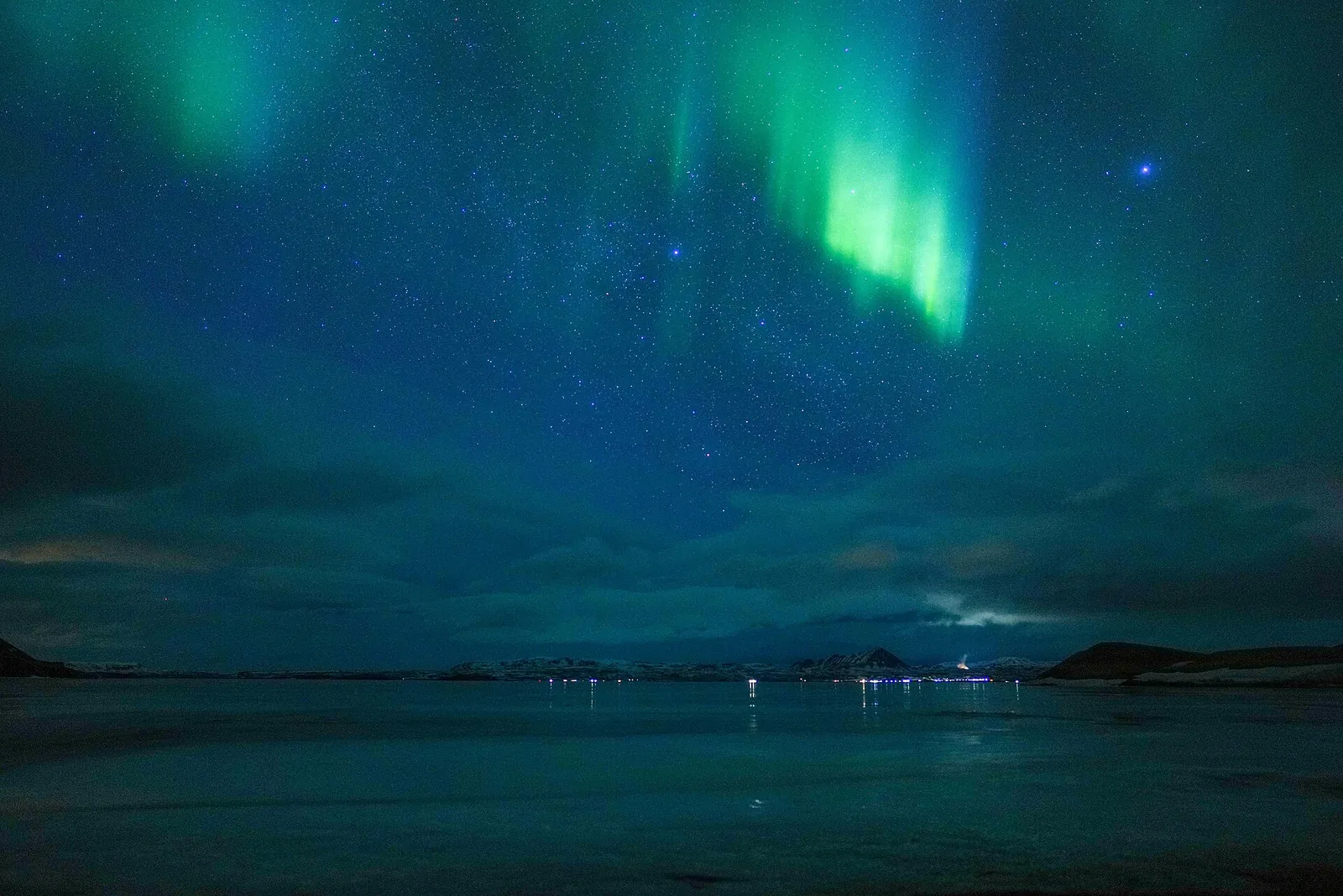
If you'd like help dialling in settings on location, Lofoten aurora photography tours pair a guide with the best north-facing beaches.
A 5-day northern lights plan: Tromsø and Lofoten
This plan gives you four aurora nights across two regions, and keeps the days worth having even if it's cloudy.
| Day | Daytime | Night |
|---|---|---|
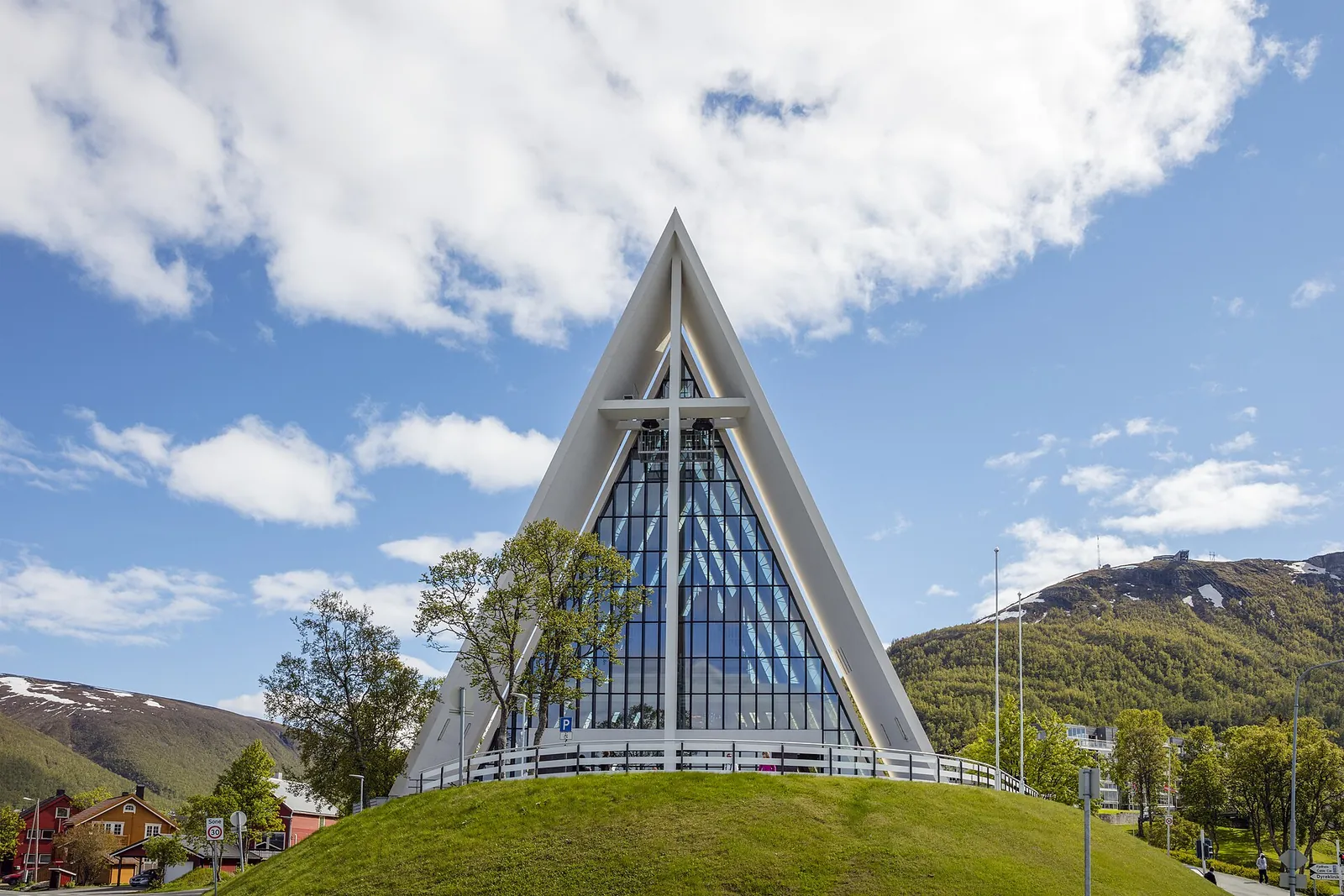
| 1 | Fly Oslo–Tromsø. Walk the harbour, visit the Arctic Cathedral and Polaria. | If clear, ride Fjellheisen for a first look over the city. Early night otherwise. |
| 2 | Choose a dog-sledding morning outside Tromsø, a reindeer visit with the Sámi or a winter fjord cruise. | Guided northern lights chase, often 6–8 hours with transfers. |
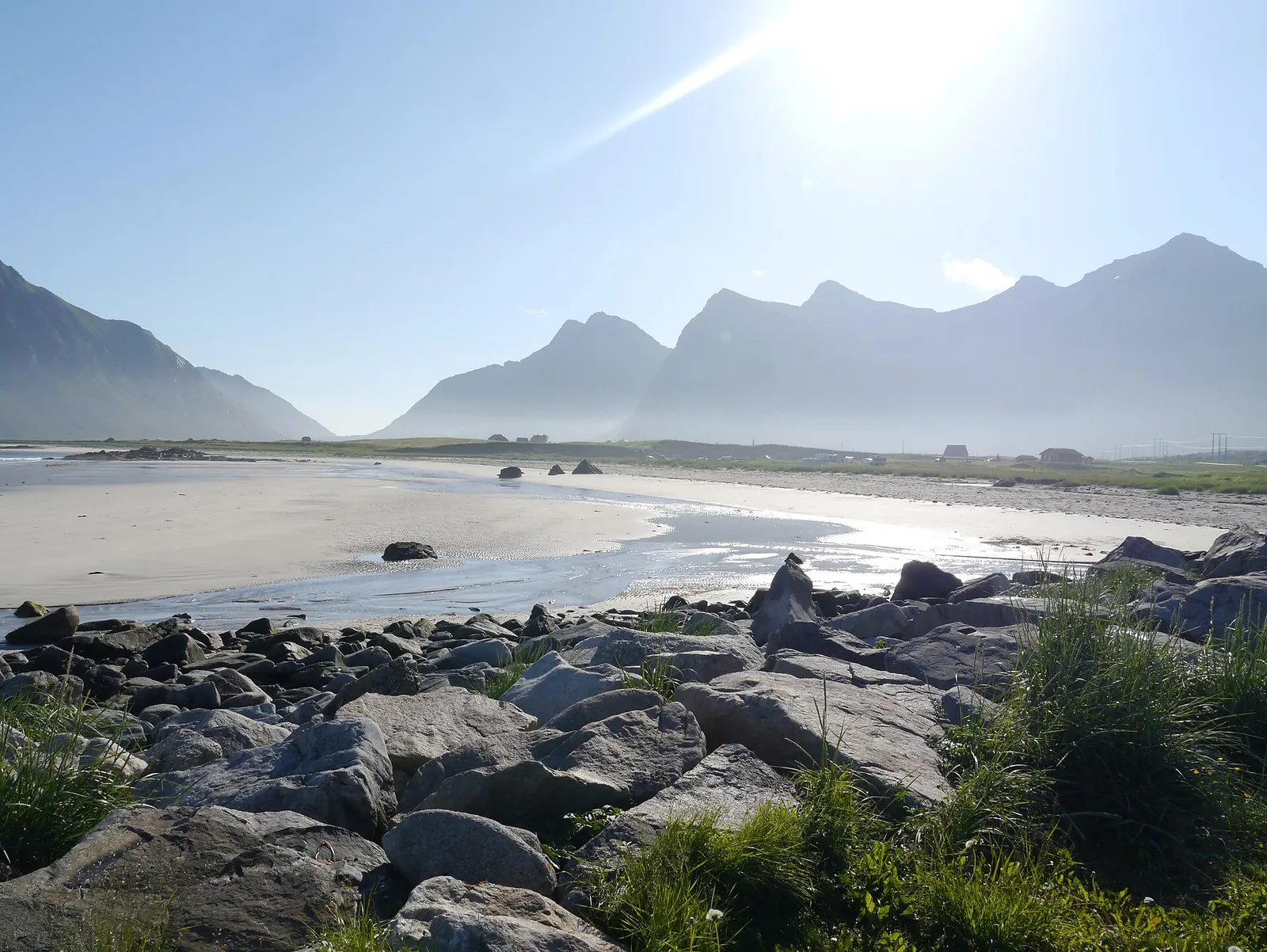
| 3 | Fly Tromsø–Leknes with Widerøe, collect a rental car, drive to your rorbu. | Uttakleiv or Haukland beach, 20–25 minutes from Leknes. |
| 4 | West to Reine, Hamnøy and Å. Short walks, photo stops, a seafood lunch. | Skagsanden or the Hamnøy bridge. Move east toward Gimsøy if the west is cloudy. |
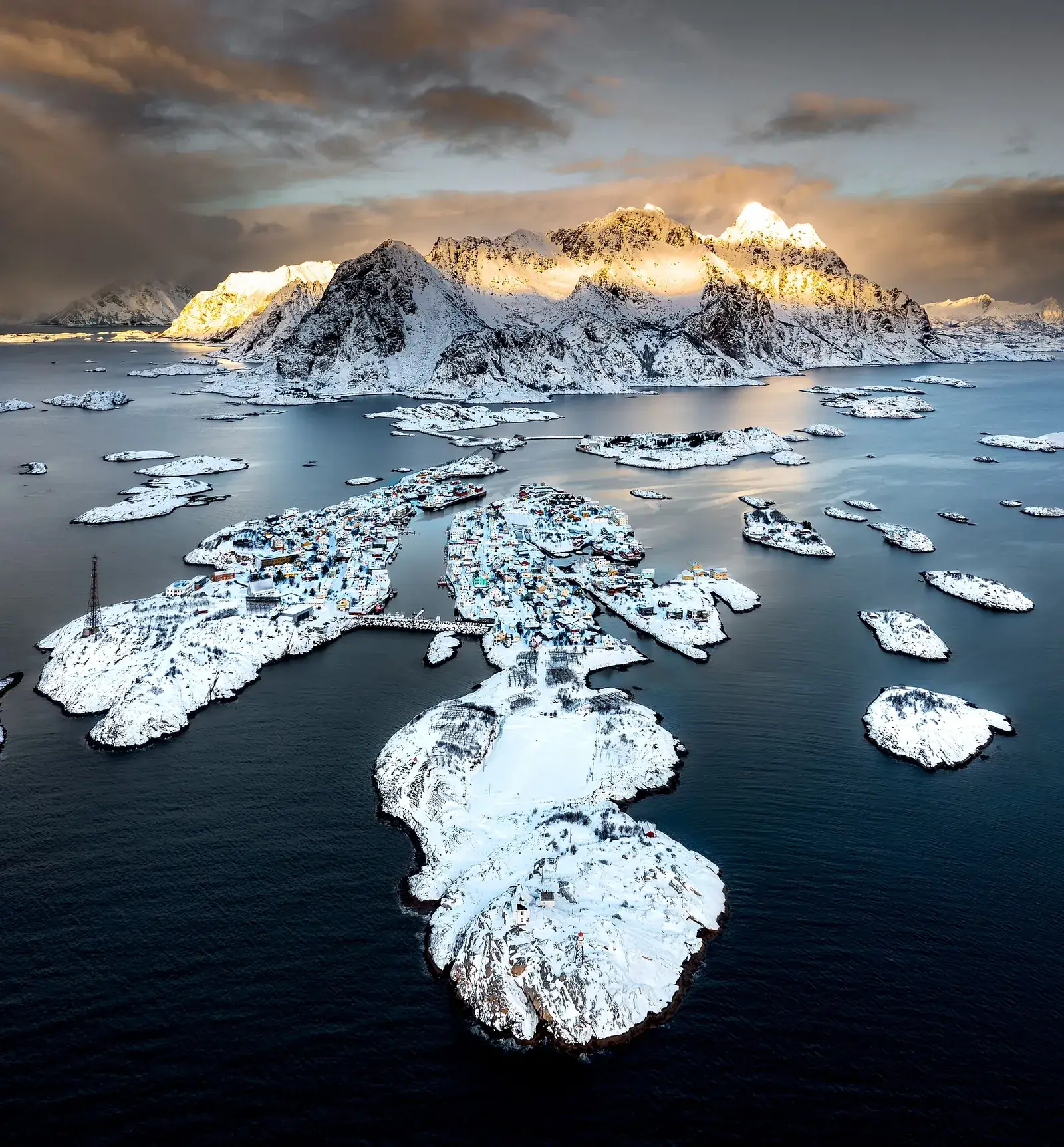
| 5 | Henningsvær's harbour and galleries, then fly home from Svolvær or Leknes via Bodø. | Fly out, or add a sixth night and try Gimsøy's open beaches one more time. |
If the forecast shows Lofoten clouded in for days while Tromsø is clear, it's worth flipping the order. Booking flexible flights or the ship gives you that option.
Practical tips
- Stay at least three nights in each region you care about. Weather, not KP, is the usual reason people miss the lights.
- Don't stop on the road. In Lofoten the temptation is huge, but stopping on the narrow E10 in the dark is dangerous. Use proper lay-bys and car parks, and keep your lights off once parked, as a courtesy to photographers.
- Respect private land and villages. Rorbu harbours are working communities. Keep noise and drones down after dark.
- Be patient. Displays often come in waves. A quiet green arc at 9 pm can turn into a sky-wide corona at 11:30.
- Look at the moon calendar. A bright moon washes out faint auroras but lights up the mountains in photos. Around new moon is better for weak displays.
- Leave the cash at home. Norway is nearly cashless. Cards and phone payment work almost everywhere, including ferries and buses.
Where this fits in a bigger trip
If you've never been to the islands, read our Lofoten guide for first-timers, which covers summer and the year-round basics. For a second aurora destination, Iceland has a similar season, and our 5-day Iceland road trip and Iceland first-timers guide show how it compares. The aurora also makes our list of once-in-a-lifetime experiences.
Frequently asked questions
When is the best time to see the northern lights in Tromsø and Lofoten?
The season runs from late September to late March, and Lofoten guides often extend it to mid-April. October, February and March are popular because you get dark nights plus enough daylight for sightseeing and driving. November to mid-January is the polar night, with the most darkness and the least daylight.
What KP index do I need to see the aurora in Tromsø?
Not much. Tromsø sits under the auroral oval, so KP 2 or 3 can put the lights overhead on a clear night. Cloud cover matters far more than KP this far north. Check cloud forecasts on yr.no first.
Is Tromsø or Lofoten better for the northern lights?
Tromsø is easier, with more flights, hotels and guided chase tours. Lofoten has darker skies and far more dramatic scenery for photos, but fewer services and longer transfers. With five days or more, combining both gives you two weather systems and better odds.
How do I get from Tromsø to Lofoten?
Widerøe flies Tromsø to Leknes in just under an hour. The Hurtigruten coastal ship sails overnight from Tromsø to Svolvær in about 17 hours. Driving is roughly 420 to 450 km and takes 6.5 to 8.5 hours in winter. From Bodø, the car ferry to Moskenes takes about 3 hours 15 minutes.
Should I book a northern lights chase tour or drive myself?
Many travellers do both. A guided chase in Tromsø is worth it because guides know where the clouds break and will drive long distances. In Lofoten, the best viewing spots sit right off the E10, so self-drive works well if you're comfortable on icy roads.
What camera settings should I use for the northern lights?
Use a tripod, a wide lens at f/1.8 to f/2.8, ISO 1600 to 3200, and a 5 to 15 second exposure for slow displays (1 to 4 seconds for fast ones). Focus manually on a distant light or star, and shoot RAW. Recent phones in night mode also work well if you brace them.
Deals on this page open on partner sites (Aviasales, Klook and others via Travelpayouts); we may earn a commission, and your price doesn’t change.
Deals for this trip
Hand-checked cards from our catalog. Booking opens on the partner site.