Tourison/Blog/Don't-miss experiences
Experience Egypt Like Never Before: Beyond the Pyramids
Tourison may earn a commission when you book through links on this page, at no extra cost to you. How we pick deals
Abu Simbel at sunrise, a balloon over Luxor's west bank, slow days on a dahabiya, a night in the White Desert and reefs off Dahab: Egypt beyond the pyramids, with real costs and timings.
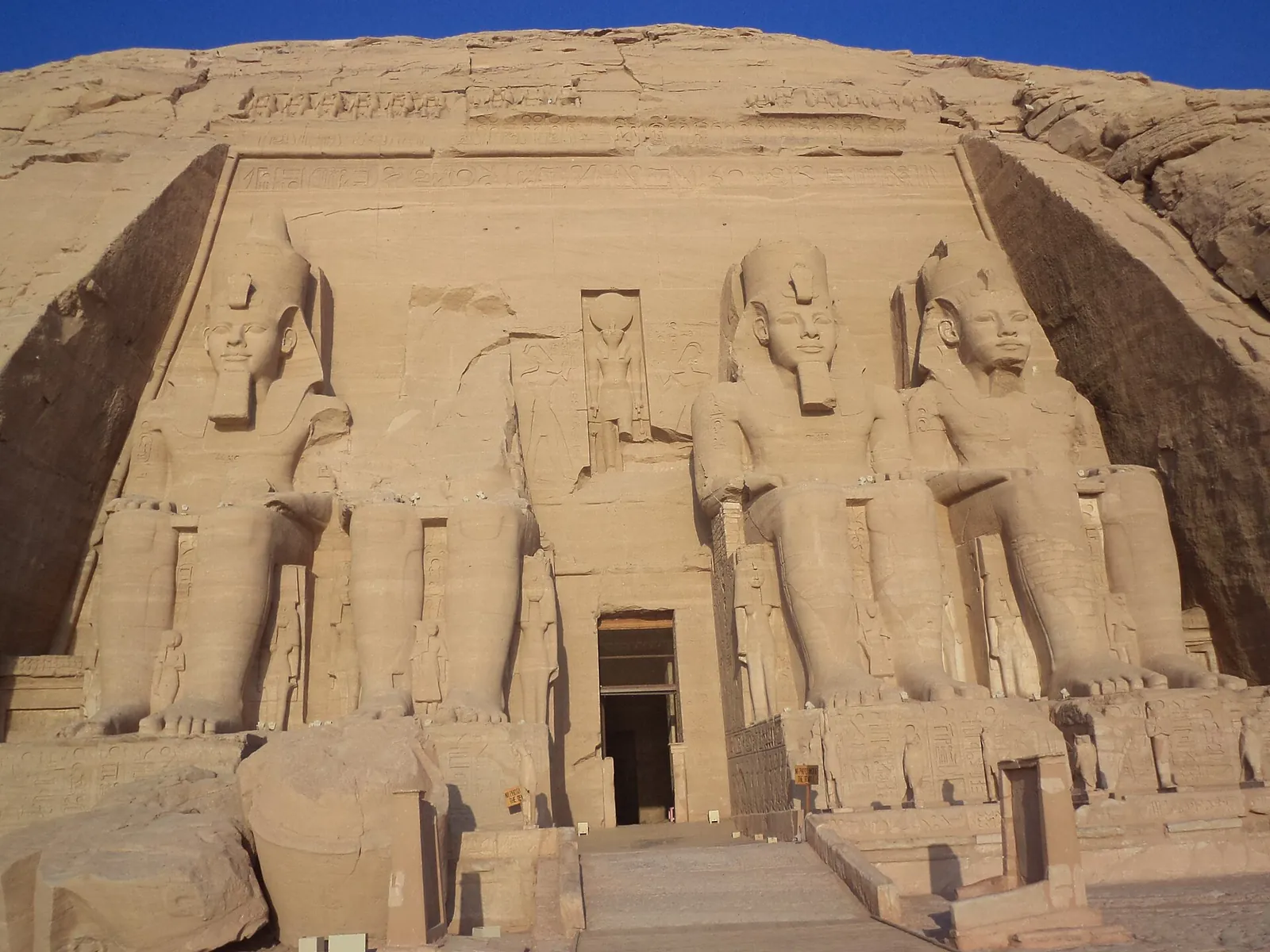
Most Egypt trips go Giza, the Grand Egyptian Museum, a quick cruise and a flight home. That's a fine trip. It also skips most of what makes the country worth a second visit. Egypt beyond the pyramids means sunrise over Ramses II's colossi at Abu Simbel, a week of slow sailing on a dahabiya, a night under chalk towers in the White Desert, and a reef you can wade into from a café in Dahab. This guide covers those experiences: how long each one takes, roughly what it costs, and how to fit several into one trip.
Planning a first trip and want the classics too? Start with our top 10 places to visit in Egypt, then come back here for what to add.
- Best time: October to April. December and January are the busiest months on the Nile; the Western Desert is best from October to March, when nights are cold but days are pleasant.
- Budget per day: from about US$60 (Oct 2026) for guesthouses, trains and public ferries; US$150–250 with a dahabiya, domestic flights and guided days.
- How to get there: fly into Cairo, then use domestic flights or the overnight sleeper train to Luxor and Aswan. Charter and connecting flights also reach Luxor (LXR) and Sharm el-Sheikh (SSH) for Dahab.
- Days needed: 10–14 days for the Nile Valley plus one desert or Red Sea stop.
Egypt beyond the pyramids: how to choose
You can't do all of this in one trip without spending half of it in transit. The country divides into three zones. The Nile Valley (Luxor, Aswan, Abu Simbel) is the richest in history. The Western Desert (the White Desert, Bahariya and Siwa) is about space and silence. The coasts (Dahab and the Sinai on one side, Alexandria on the Mediterranean on the other) are where you slow down.
Ten days comfortably covers the Nile Valley plus one of the other two. With two weeks you can add a third. Use Cairo as the hinge between them: most desert trips leave from there, and so do the cheapest domestic flights.
Abu Simbel at sunrise
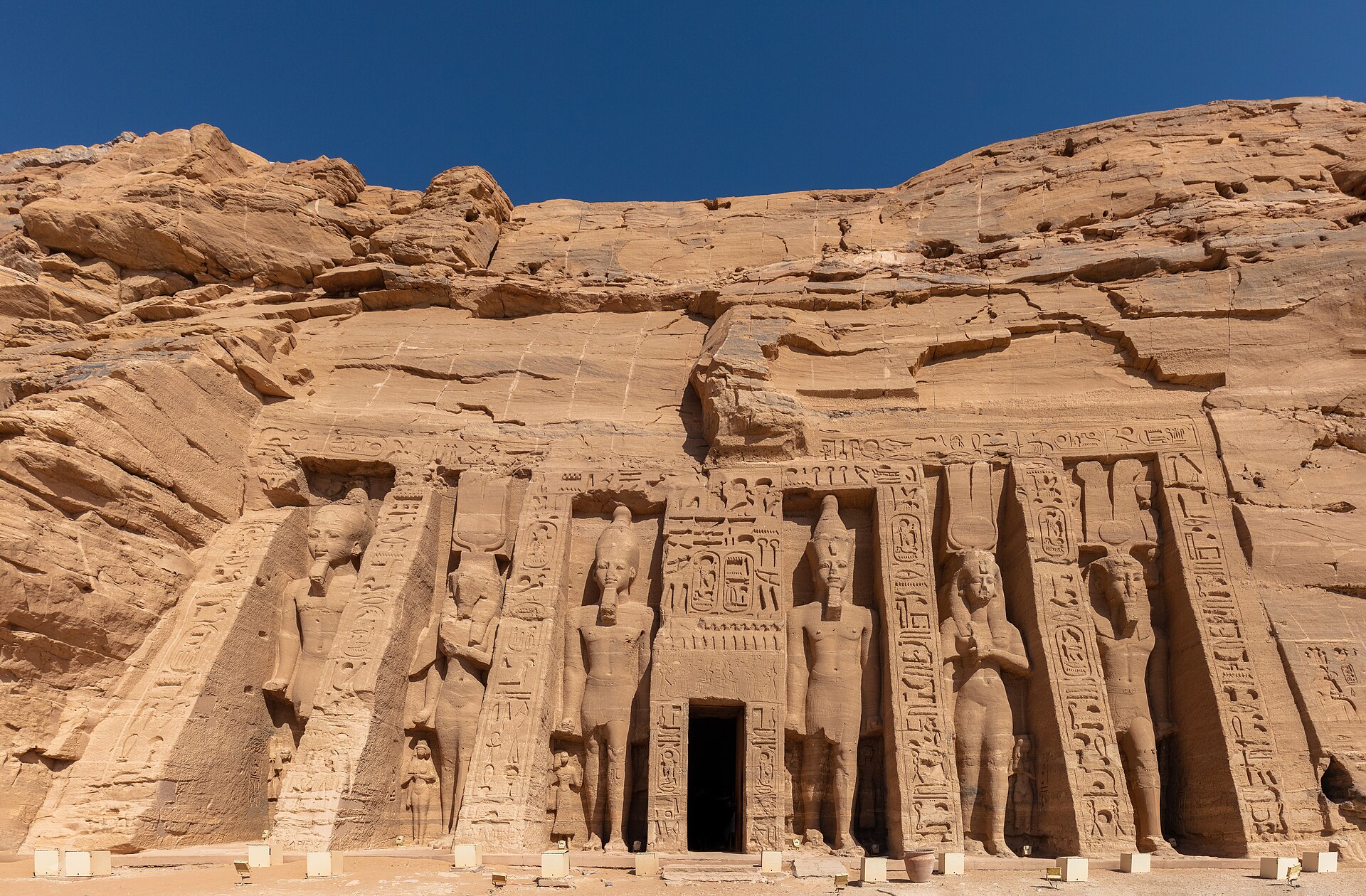
Ramses II built the two temples at Abu Simbel to impress anyone arriving from the south, and they still work. The four seated colossi on the Great Temple are about 20 metres tall. Behind them, the rock-cut halls run deep into the hill. In the 1960s the whole complex was cut into blocks and moved up the slope to escape the rising waters of Lake Nasser. Look for the seams in the stone. They're still visible if you know where to check.
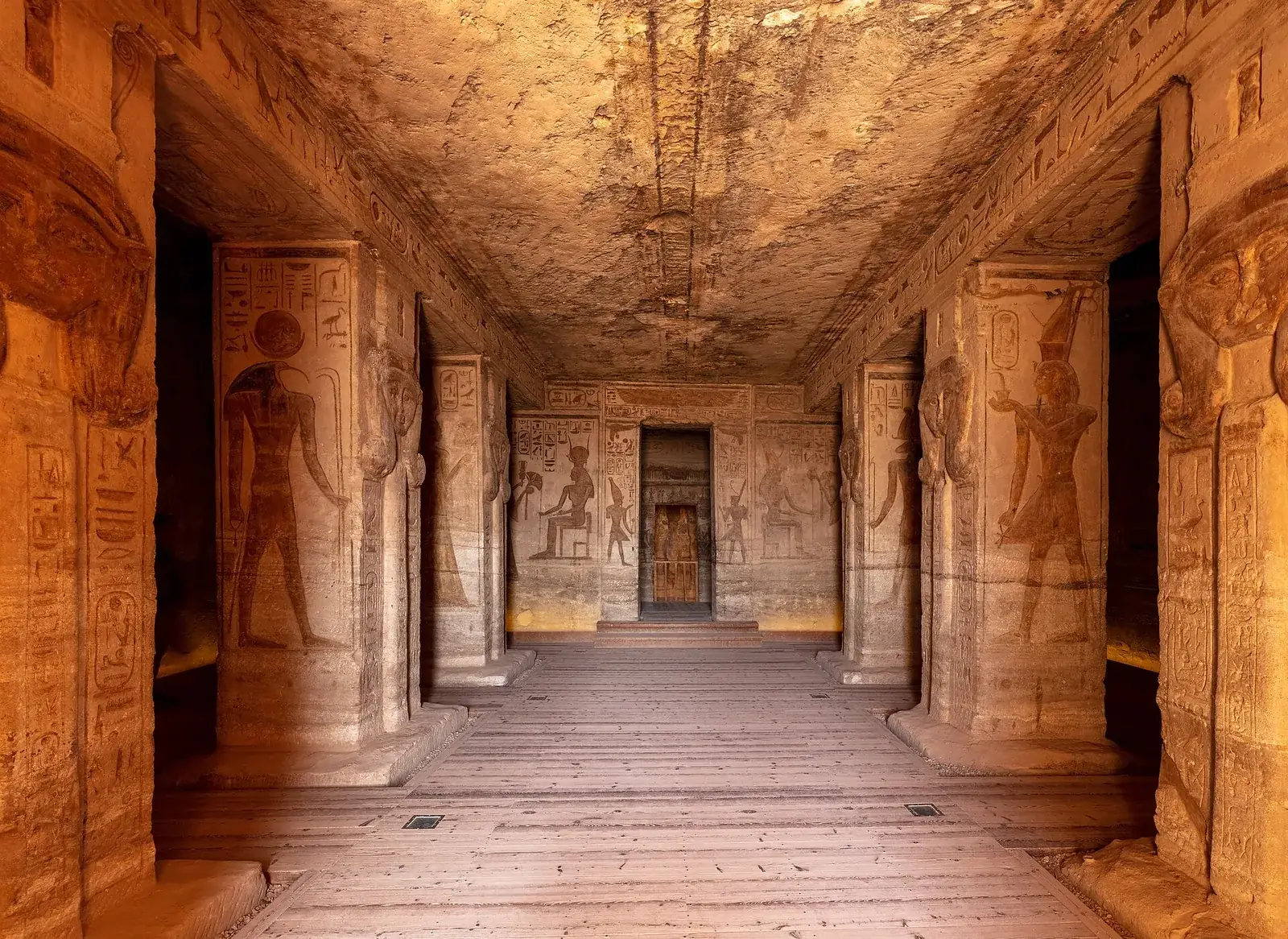
Most visitors come on a day trip from Aswan. The road is roughly 280–290 km each way, so plan on about three hours of driving in each direction. Tours leave Aswan around 4–5am so you arrive before the heat and the crowds. Ask your operator about the current departure rules, since checkpoint and convoy arrangements have changed over the years. You can also fly. EgyptAir runs short hops from Aswan, but schedules are thin and often only open a few weeks ahead. A shared Abu Simbel day trip from Aswan is the simplest option for most people.
Entry for foreign adults was around 750–850 EGP in 2026, with higher prices on Sun Festival days. The ticket office is reported to be card-only. Twice a year, around 22 February and 22 October, the rising sun lines up with the temple axis and lights the statues in the inner sanctuary. It's a striking sight, but expect very large crowds and book transport well in advance if your dates overlap.
Sun Festival departures from Aswan fill weeks ahead; see Abu Simbel Sun Festival tours if your trip lands on 22 October or 22 February.
Luxor's west bank, from the air and on foot
Most people do Luxor's west bank in a rushed morning: the Valley of the Kings, Hatshepsut's temple and the Colossi of Memnon, then back to the boat. Give it a full day, or two half-days, and it changes completely.
The balloon flight
Dozens of balloons launch from the west bank at dawn, drifting over sugarcane fields, mud-brick villages and the terraces of Deir el-Bahari. A Luxor hot air balloon ride costs from about US$75 (Oct 2026) with hotel pickup, and premium operators charge US$110–120. Pickup is usually around 4:30–5am, and flights last 40–60 minutes. It costs far less than ballooning in Cappadocia, and the landscape below is 3,500 years old. Flights are sometimes cancelled for wind, so book it early in your stay so there's time to reschedule.

The tombs most people miss
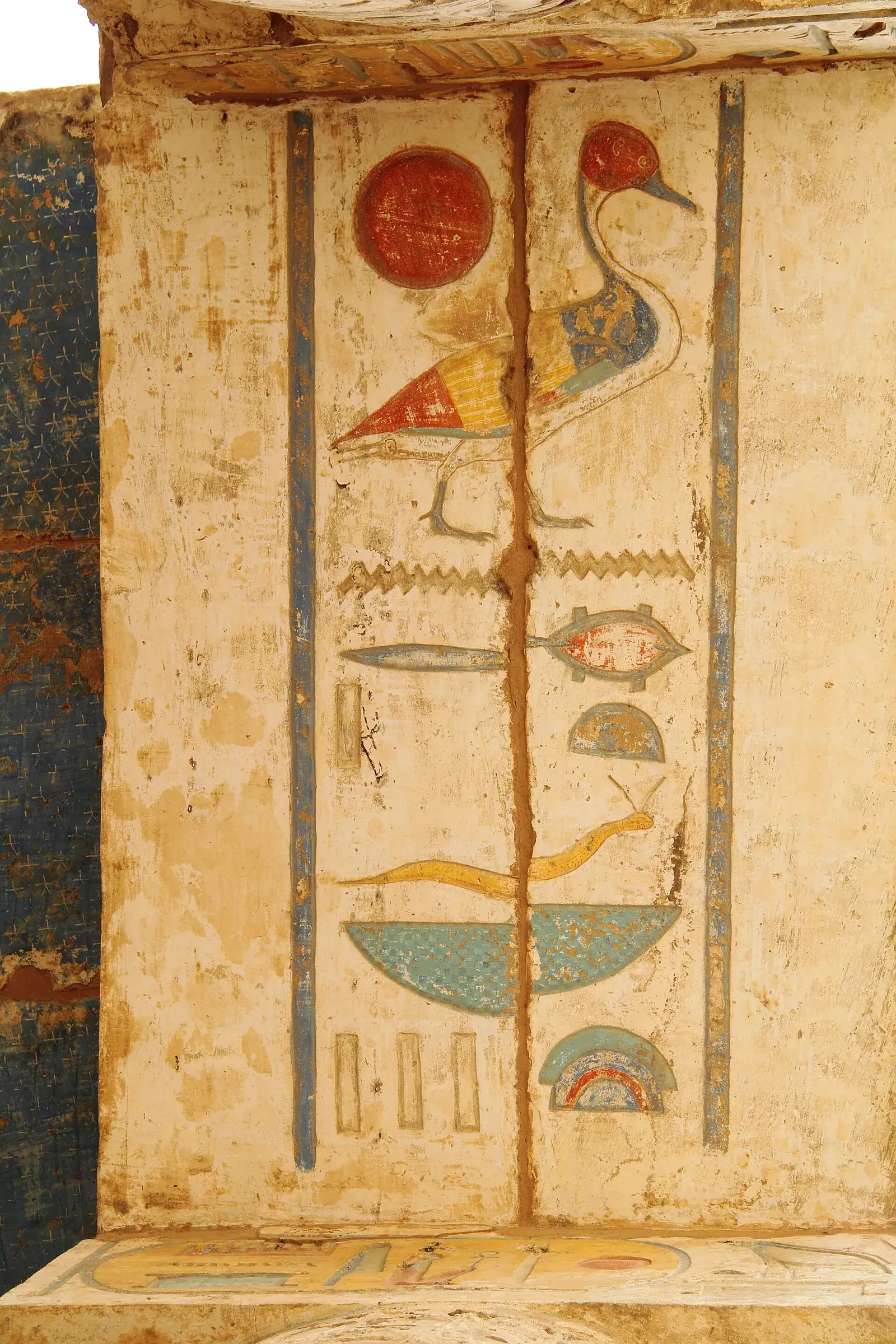
The standard Valley of the Kings ticket (about 750 EGP in 2026) gets you into three tombs from a rotating list. The tomb of Seti I is a separate ticket, around 2,000 EGP. It's the longest and most richly painted tomb in the valley, and well worth the money if you only add one. Tutankhamun's tomb costs extra too (about 700 EGP). It's small, but the mummy is still inside.
After that, skip the coach-tour circuit. Medinet Habu, the mortuary temple of Ramses III, has some of the best-preserved painted reliefs in Egypt and a fraction of the visitors. Deir el-Medina, the village where the tomb builders lived, has small family tombs with bright, almost playful paintings. Hire a car and driver for the day, or cycle from the west bank ferry landing if it's cool.
Flying straight into Luxor saves a day of transit. Check flights from Oslo to Luxor, which usually connect via Cairo or Istanbul.
A licensed Egyptologist makes the tombs far more rewarding; compare guided Luxor west bank day tours on Klook.
Slow down on the Nile: felucca or dahabiya
The big cruise ships are efficient. Four nights between Luxor and Aswan, with temple stops at Edfu and Kom Ombo. But they travel in convoys and moor in long rows, sometimes five boats deep. There are two slower ways to see the river.
Felucca
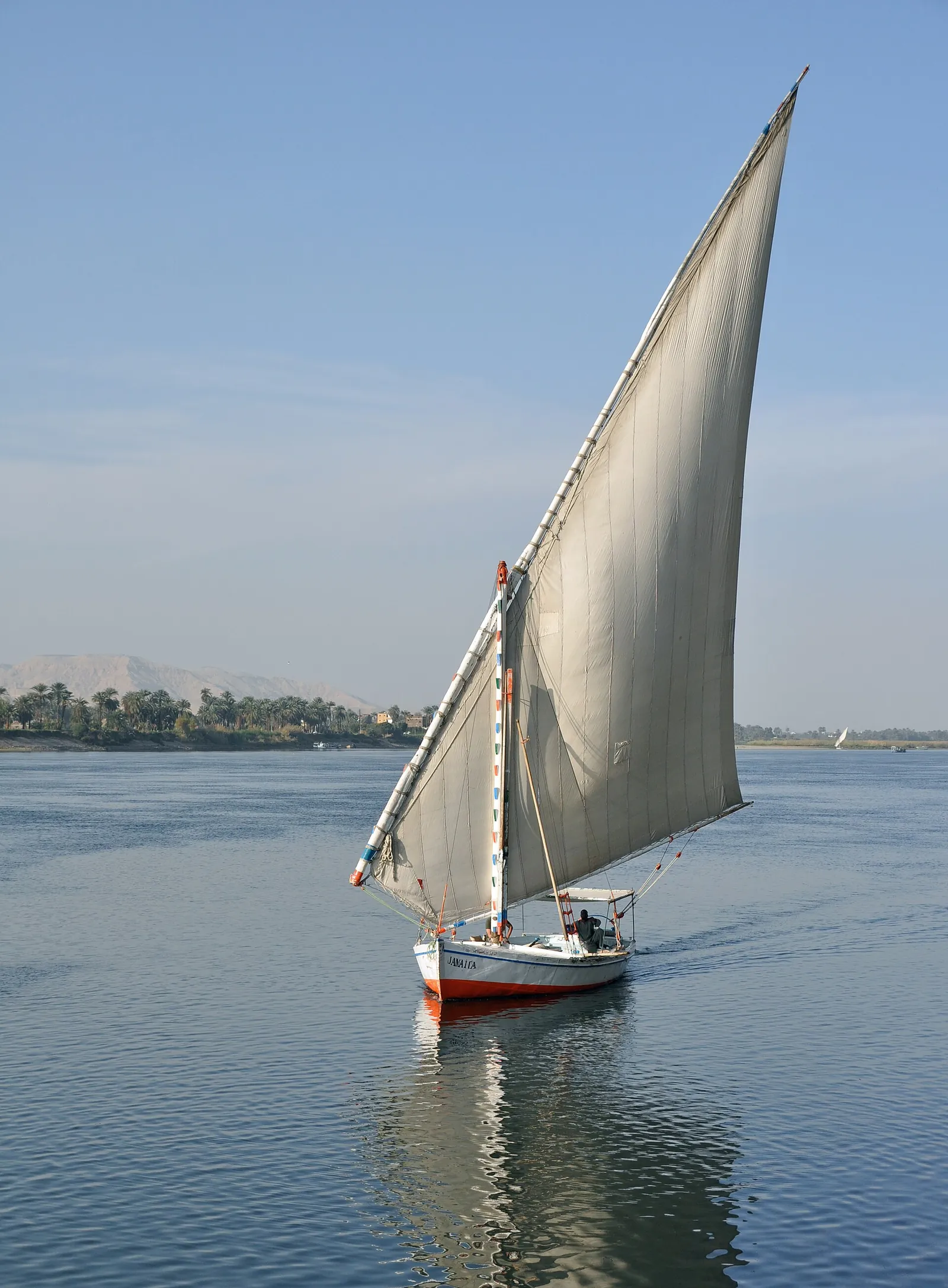
A felucca is a small wooden sailboat with one big triangular sail and no engine. In Aswan, an hour's sail at sunset around Elephantine and Kitchener's Island is one of the easiest pleasures in Egypt. Agree on the price and duration with the captain before you board. Hotels can recommend someone. Hardier travellers can sleep aboard for two or three nights on deck mattresses, sailing downstream toward Kom Ombo or Edfu. It's basic and the toilet is the riverbank, but nights on deck under the stars are memorable.
Dahabiya
A dahabiya is a two-masted houseboat with six to twelve cabins, a sun deck and a cook. Most sail between Esna (just south of Luxor) and Aswan over four or five nights. They tie up at sandbanks and small villages the big ships can't reach, and stop at quieter sites like Gebel el-Silsila. Expect from about US$190 per person per night (Oct 2026) on the simpler boats, usually with meals and guiding included. Prices go well above that for the boutique ones. Book months ahead for December to February.
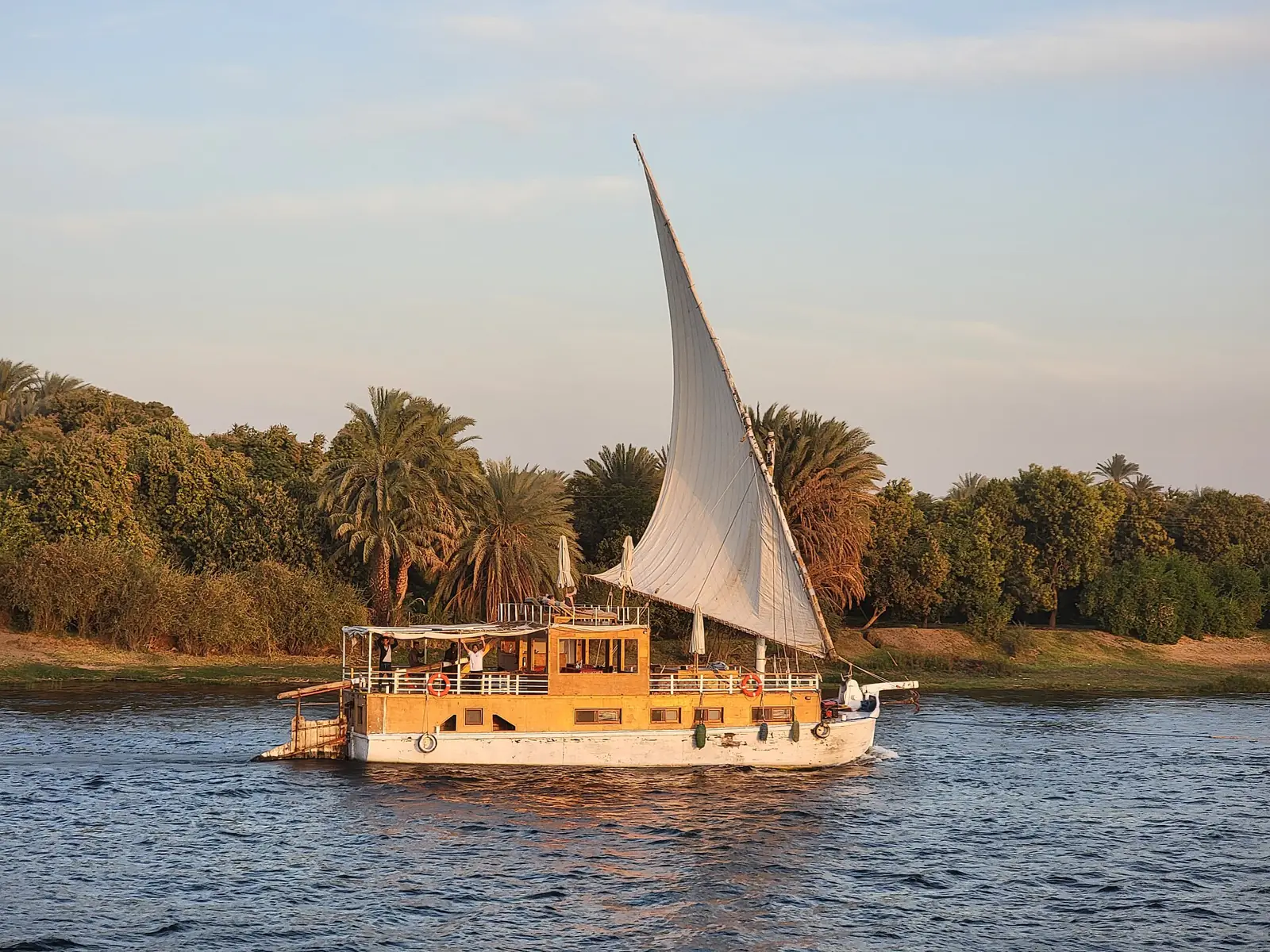
Dahabiyas take only a handful of cabins, so winter dates go early; compare Esna to Aswan dahabiya cruises on Klook.
If you'd rather keep it simple, a packaged Nile trip that bundles Cairo, Luxor and the cruise is the low-effort option:
Aswan and the Nubian villages
Aswan feels different from Luxor. The river narrows between granite boulders, the light is softer, and the pace slows. The Nubian community here has its own language, architecture and food, and the villages on the west bank, especially Gharb Soheil, are painted in bright blues, yellows and pinks.
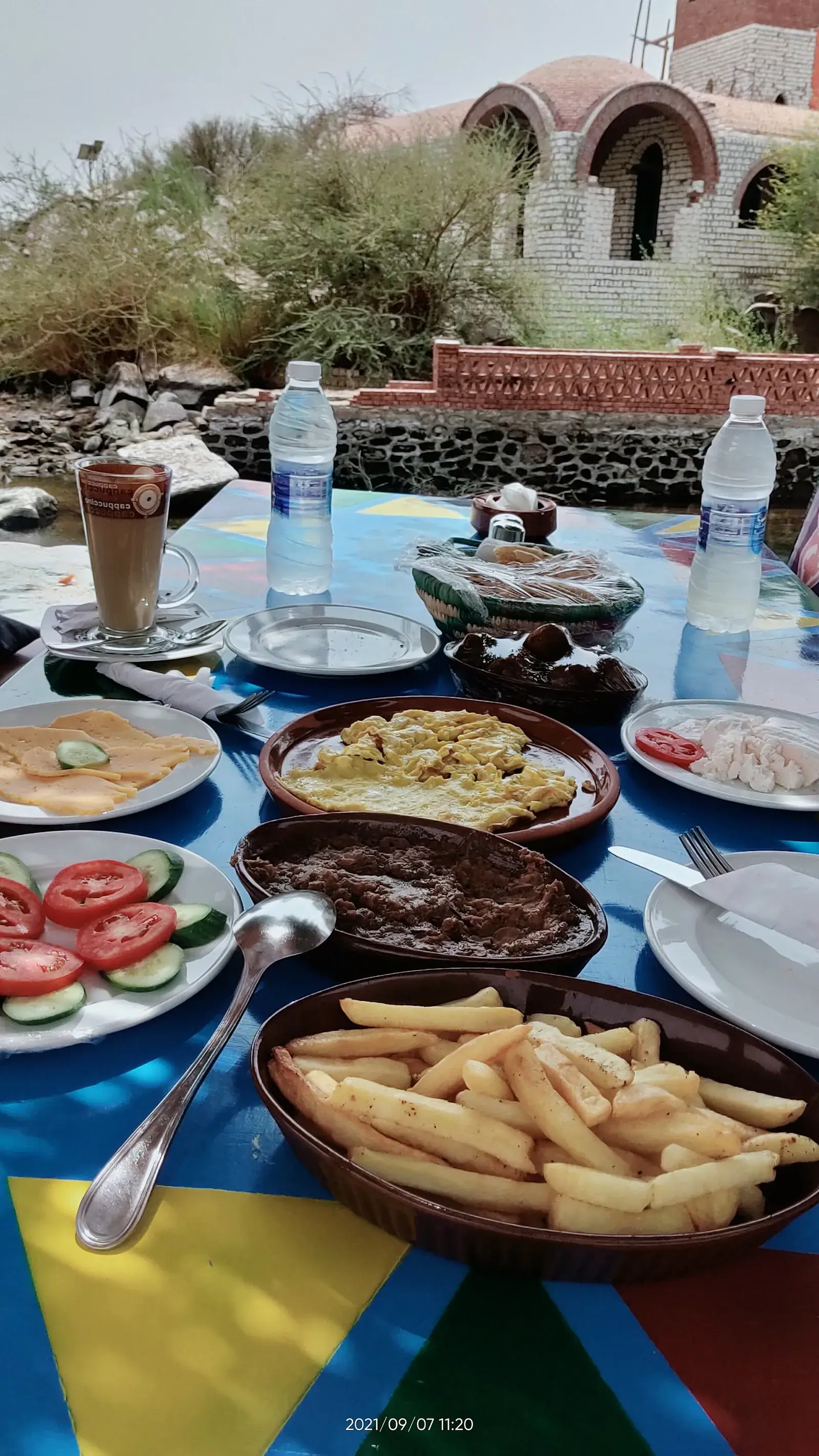
Most people visit by boat in the afternoon, often combined with a stop at a Nubian house for tea and a look at the domed rooms. The visits are fairly commercial, and some houses keep crocodiles for tourists, which you can skip. Still, the setting is lovely and the boat ride past Elephantine Island is reason enough to go. A Nubian village tour by boat handles the logistics. Or spend a night in a Nubian guesthouse on the west bank. Several take bookings, and the evening there is far quieter than the tour version.
While you're in Aswan, take the short boat ride to Philae Temple on its island. Then spend an hour in the Nubia Museum, which tells the story of the villages lost under Lake Nasser.
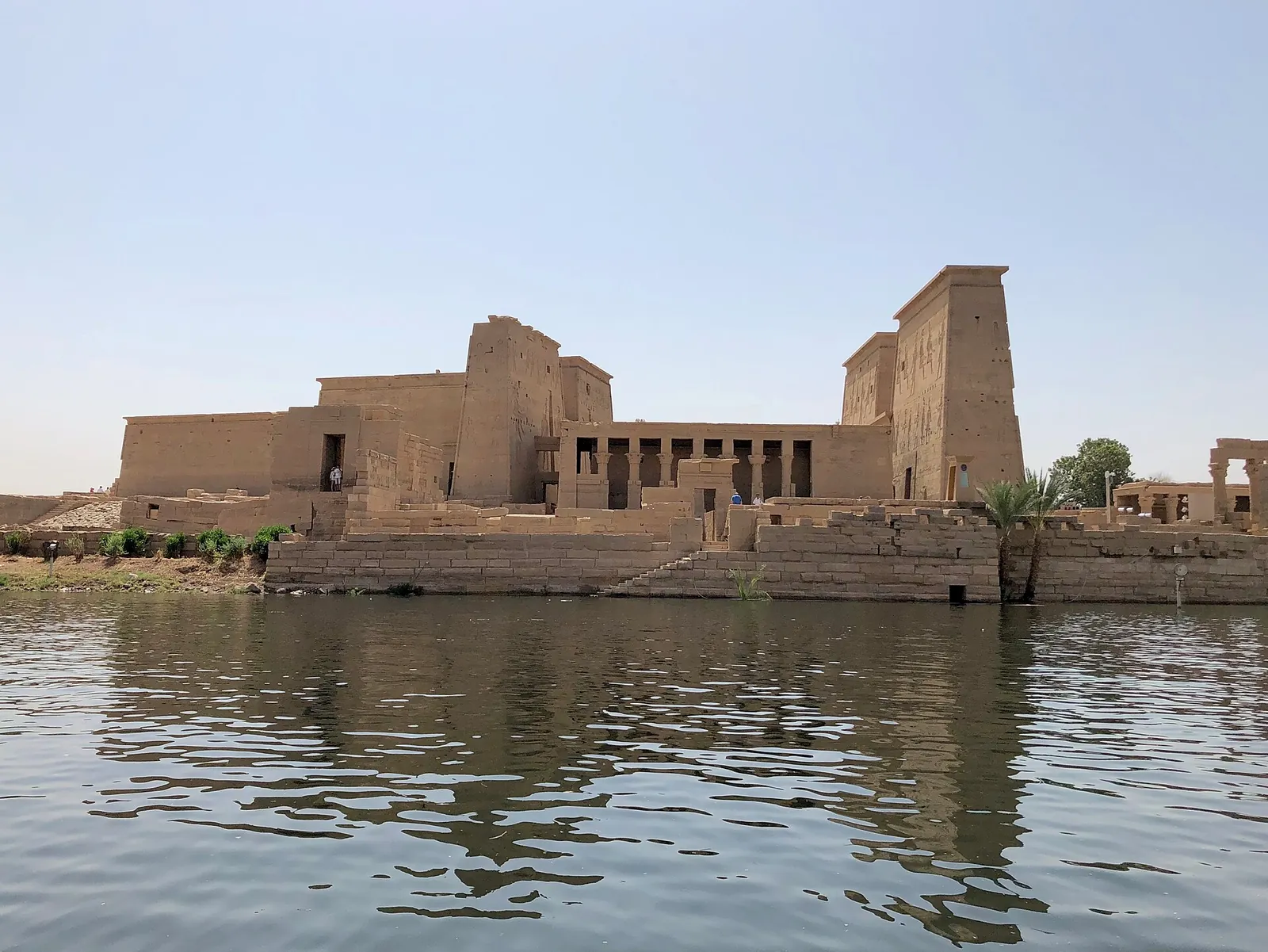
Philae is only reachable by boat from the Shellal landing; a guided Philae Temple tour includes the boat and entry.
The White Desert and Bahariya
About five hours' drive southwest of Cairo, Bahariya Oasis is the gateway to the White Desert National Park. It's a plain of wind-carved chalk shaped like mushrooms and towers, which turns pink at sunset and silver under a full moon. On the way you cross the Black Desert, with its volcanic-topped hills, and Crystal Mountain, a ridge of quartz.
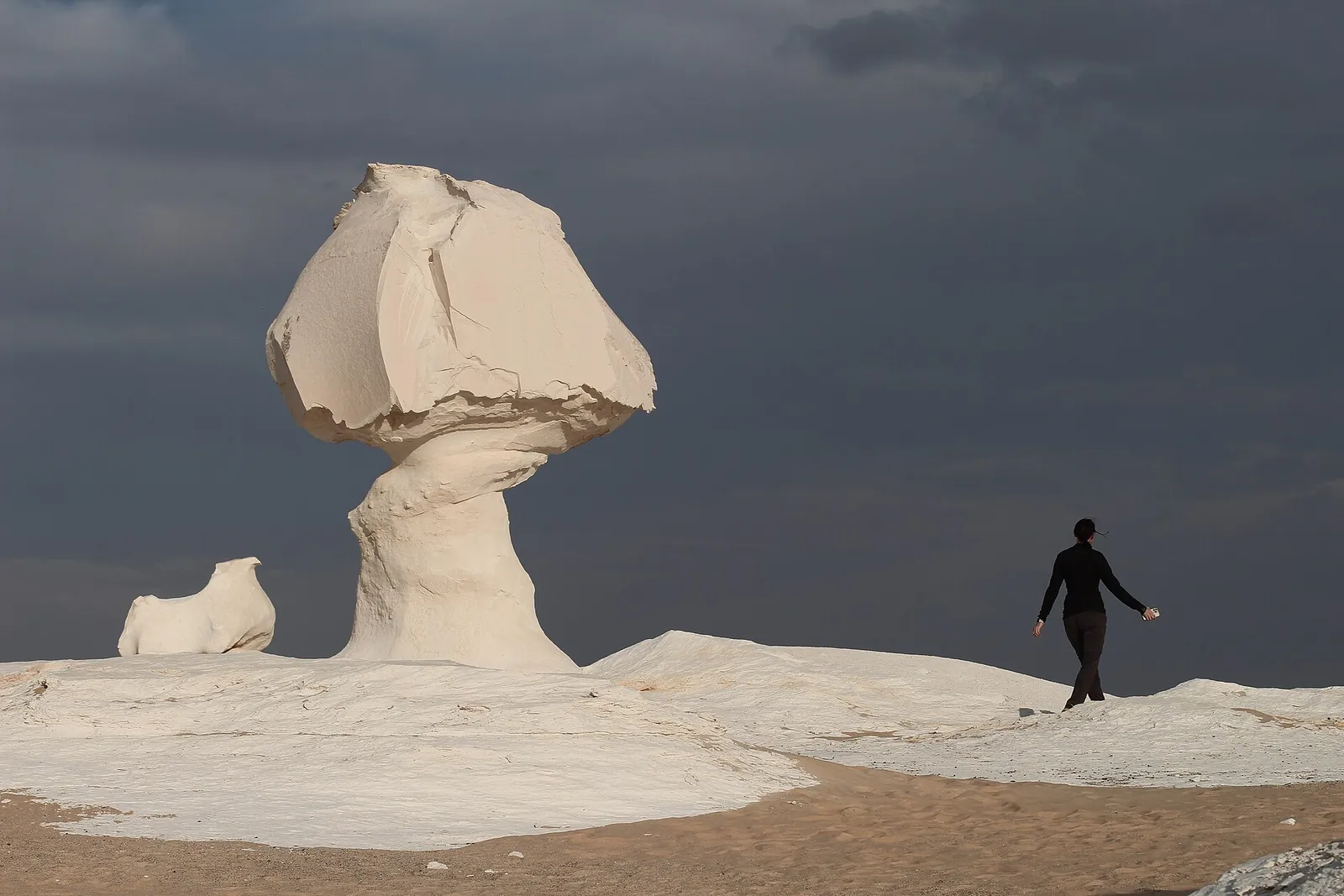
The standard format is an overnight trip from Cairo: an early pickup, the drive to Bahariya, a 4x4 afternoon through the desert, dinner by a fire and a night in a simple camp or a tent. Shared tours start from about US$100–120 per person (Oct 2026). Private two- or three-night trips cost from about US$380. Check whether national park fees and meals are included. Book a White Desert overnight camping trip for October to March. Summer days are brutal, and winter nights can drop close to freezing, so pack a warm layer either way.
Because these trips start and end in Cairo, it's worth staying a night either side in a central neighbourhood like Zamalek or Downtown:
Siwa Oasis
Siwa sits about 50 km from the Libyan border, a palm-and-salt-lake oasis with its own Amazigh (Berber) language and a slow, conservative rhythm. The old town of Shali is a crumbling citadel built from kershef, a mix of salt and mud. It glows at sunset. Alexander the Great came here to consult the Oracle of Amun, and the temple ruins still stand on the hill at Aghurmi.
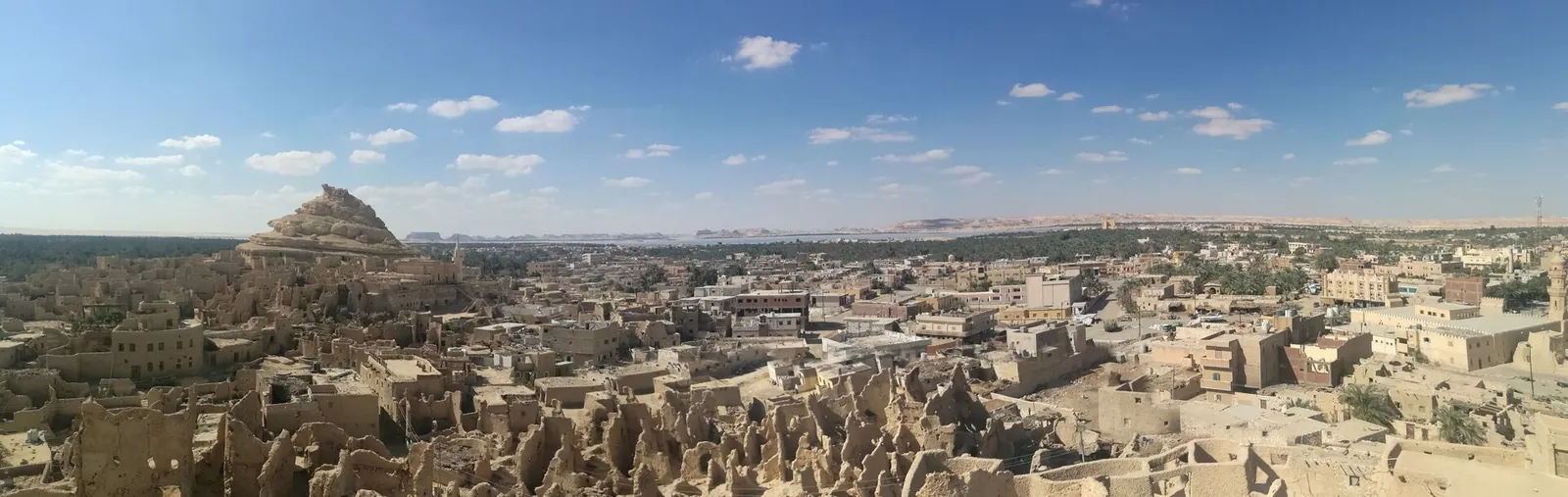
Siwa is best for a quiet three or four days: floating in the salt pools (the water is so dense you can't sink), swimming in Cleopatra's Spring, cycling between date groves, and taking a 4x4 trip into the Great Sand Sea for dune bashing and sunset. Getting there is the hard part. The overnight bus from Cairo takes roughly 10–12 hours, or you can go via Marsa Matrouh on the coast, about four hours from Siwa. Expect several police checkpoints, so carry your passport. The town is conservative, so cover shoulders and knees. If you're short on time, a multi-day Siwa Oasis tour from Cairo covers the transport.
Dahab and the Red Sea
Dahab is a small town on the Gulf of Aqaba, on the Sinai's east coast. It began as a Bedouin fishing village, became a backpacker stop, and is now a laid-back dive town with a seafront promenade of cushioned cafés. The reef starts a few metres from shore, so snorkelling here costs little more than the fins.
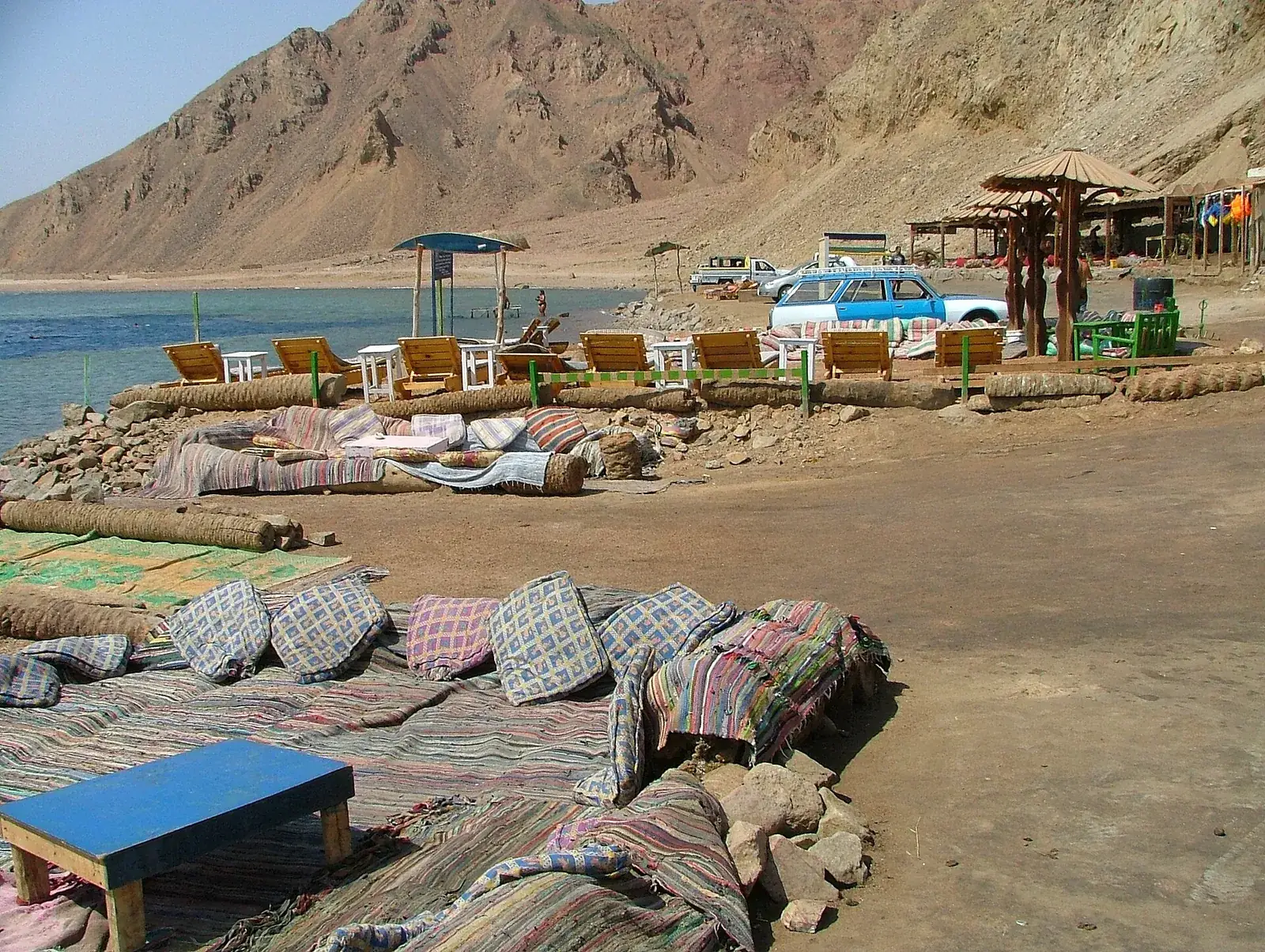
The best-known site is the Blue Hole, north of town, a deep sinkhole whose reef rim is excellent for snorkelling. Its depths have taken many technical divers' lives, so stay within your training. The Canyon, on the same stretch, and the Three Pools, south of town, are both easy shore entries. Beyond the water, you can hike in the mountains with Bedouin guides, or take a night trip to Mount Sinai to climb for sunrise and visit St Catherine's Monastery. Book Blue Hole snorkelling trips or diving through a licensed centre. Dahab has dozens.
Summit trips leave Dahab late in the evening; Mount Sinai sunrise hikes include transport and a Bedouin guide.
The closest airport is Sharm el-Sheikh, about an hour's drive south. Search flights from Oslo to Sharm el-Sheikh, which often run as winter charters. The Go Bus from Cairo takes about 10 hours.
Alexandria
Alexandria is Egypt's Mediterranean city, founded by Alexander and later home to Cleopatra. Most of the ancient city lies under the modern one or under the harbour. What remains is a faded, cosmopolitan seafront, the Corniche, with Belle Époque cafés, fish restaurants and a very different mood from Cairo.
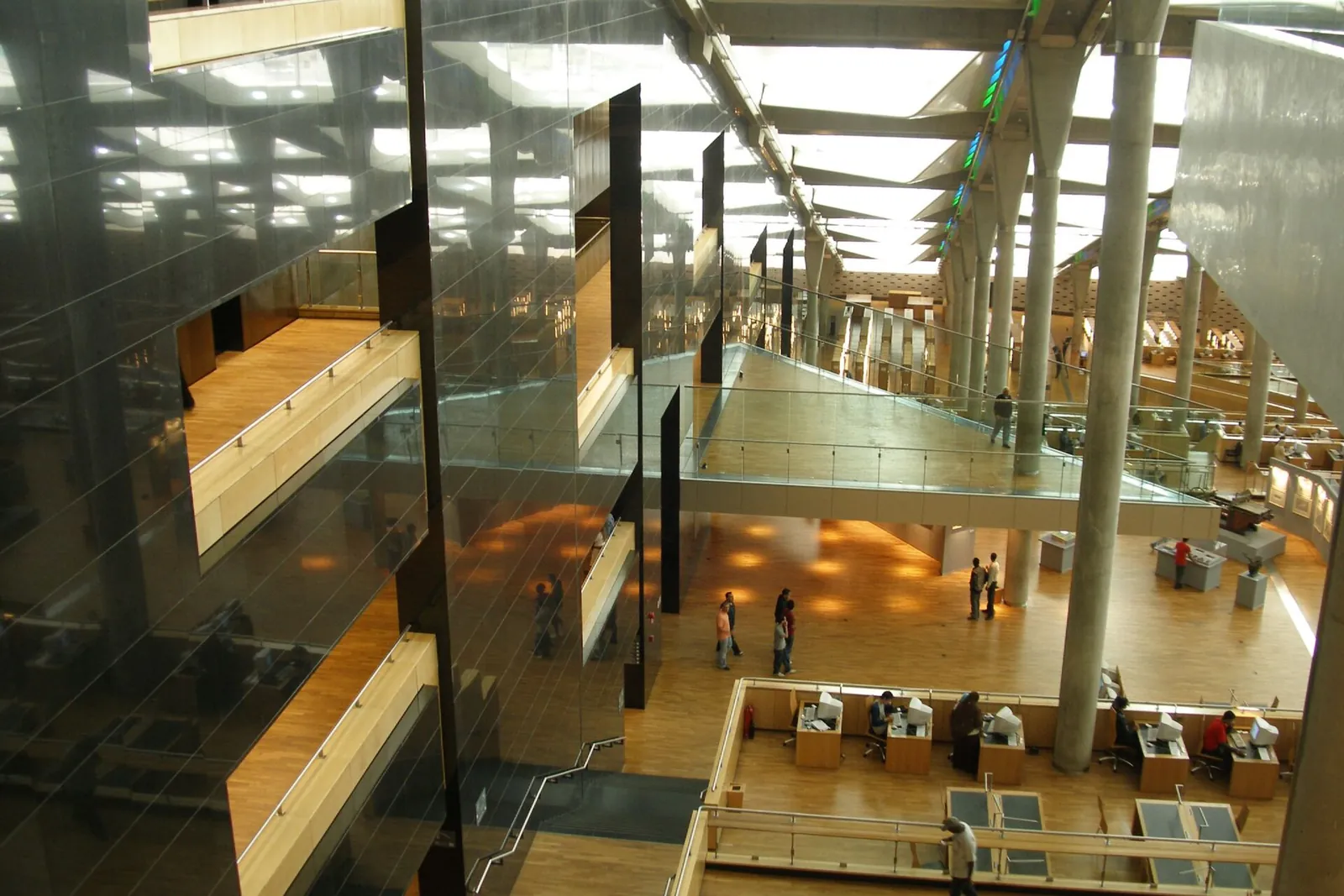
See the Bibliotheca Alexandrina, a modern successor to the ancient library with a vast sloping reading room. The inclusive ticket for foreign adults was 300 EGP on the official site, and it covers the antiquities and manuscripts museums too. Also visit the Catacombs of Kom el-Shoqafa, a Roman-era tomb complex mixing Egyptian and Greek styles, and the Citadel of Qaitbay, built on the site of the ancient Pharos lighthouse. Finish with seafood by the harbour. Trains from Cairo take around two and a half to three hours, which makes Alexandria a possible day trip, but one night lets you see the Corniche at sunset. A guided Alexandria day trip from Cairo is the easiest option if you only have one day.
A 12-day route that fits most of it in
This itinerary covers the Nile Valley in depth, with one desert night and a few days on the Red Sea. Swap Dahab for Siwa if you prefer desert to reef.
| Days | Where | What to do | Rough cost per person |
|---|---|---|---|
| 1–2 | Cairo | Arrive, Islamic Cairo, the Grand Egyptian Museum | Hotel from about US$55/night |
| 3–4 | White Desert | Overnight camping trip from Cairo, back the next evening | From about US$100–120 |
| 5–6 | Luxor | Balloon at dawn, west bank tombs, Medinet Habu | Balloon from about US$75; tombs ~1,500–3,500 EGP |
| 7–9 | Nile | Dahabiya or felucca toward Aswan, or a 3-night cruise | Dahabiya from about US$190/night |
| 10 | Aswan & Abu Simbel | Pre-dawn trip to Abu Simbel, Nubian village by boat in the afternoon | Entry ~750–850 EGP plus transport |
| 11–12 | Dahab | Fly via Cairo to Sharm el-Sheikh, transfer to Dahab, snorkel the Blue Hole | Guesthouses are inexpensive; snorkel trips are cheap |
Prices as of October 2026. Ticket prices in Egypt change often, so check before you go.
For the early flight south on day 5, compare flights from Cairo to Luxor; the hop takes about an hour.
Practical tips
- Visa: many nationalities, including most Europeans, can get an e-visa online or a visa on arrival. The single-entry e-visa was listed at US$25 in 2026. Reports put the on-arrival fee at US$30 since March 2026, so check before you fly.
- Cash and cards: major sites are increasingly card-only at the ticket office, but you'll still need small Egyptian pound notes for tips, taxis and felucca captains.
- Getting around: the overnight sleeper train between Cairo and Luxor or Aswan saves a hotel night. Domestic flights on EgyptAir are fast and often cheap if booked early.
- Guides: a licensed Egyptologist makes a big difference in Luxor and at Abu Simbel. Elsewhere you can manage on your own.
- Dress: loose, covering clothes are the norm outside resort areas, and especially in Siwa and Upper Egypt villages.
- Heat: from May to September, Aswan and Abu Simbel regularly top 40°C. If you travel then, see everything before 10am.
For flights into Cairo, our Oslo route deal is a good starting point:
For more on the country, see our Egypt destination page. If Egypt is one stop on a bigger list, our roundups of once-in-a-lifetime experiences and the cheapest dream destinations are good next reads.
Frequently asked questions
What is there to do in Egypt beyond the pyramids?
The highlights are Abu Simbel at sunrise, a hot air balloon and the quieter tombs on Luxor's west bank, Nubian villages in Aswan, sailing the Nile by felucca or dahabiya, camping in the White Desert, the oasis town of Siwa, snorkelling and diving in Dahab, and the Mediterranean city of Alexandria.
How many days do I need to see Egypt beyond Cairo?
Plan 10 to 14 days. Ten days covers Luxor, a slow Nile trip, Aswan and Abu Simbel plus one extra region such as the White Desert or Dahab. Two weeks lets you add a third.
How much does a Luxor hot air balloon ride cost?
Shared sunrise flights with hotel pickup start from about US$75 per person as of October 2026, with premium operators charging around US$110 to US$120. Flights last about 40 to 60 minutes and can be cancelled for wind.
Is a dahabiya better than a regular Nile cruise?
A dahabiya carries far fewer passengers, moors at small islands and villages the big ships cannot reach, and feels much calmer. It costs more, from about US$190 per person per night as of October 2026, and usually sails between Esna and Aswan over four or five nights.
Can you visit Abu Simbel as a day trip from Aswan?
Yes. Tours leave Aswan around 4 to 5am for the roughly three-hour drive each way and return by early afternoon. You can also fly from Aswan on short EgyptAir flights, though schedules are limited.
When is the best time to visit the White Desert and Siwa?
October to March. Days are mild and nights are cold, sometimes close to freezing in the White Desert. Summer daytime heat makes desert trips uncomfortable and tiring.
How do I get to Dahab?
The closest airport is Sharm el-Sheikh, about an hour's drive south. Go Bus also runs from Cairo to Dahab in roughly 10 hours.
Deals on this page open on partner sites (Aviasales, Klook and others via Travelpayouts); we may earn a commission, and your price doesn’t change.
Deals for this trip
Hand-checked cards from our catalog. Booking opens on the partner site.